


-
 Written by:
Noémi Vizi
Written by:
Noémi Vizi
- Photos: Soós Bertalan
- Reading time: 3 minutes

Pálóczi Horváth Castle – Örkény
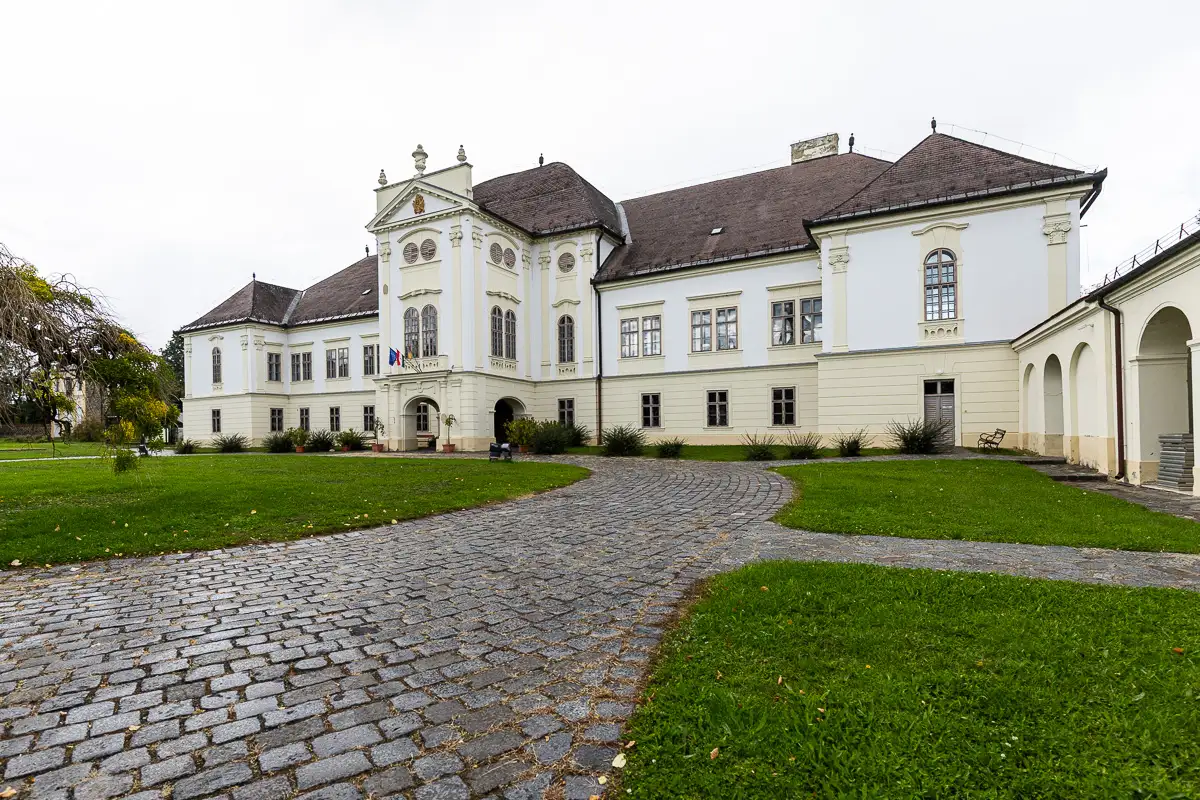
Our next destination is the town of Örkény, where we visit the Pálóczi Horváth Castle. The history of the building dates back to 1889, when the landowner István Pálóczi Horváth and his wife, Ilona Katona, envisioned the construction of their residence, which was completed in 1893. Since 1963, the castle has served as the town's Cultural Centre, hosting a wide variety of local events and community programmes. We spoke with Gábor Patak, Director of the Leisure Centre, to learn more about the castle's fascinating past.
The Pálóczi Horváth family originally came from what is now Upper Hungary (present-day Slovakia) and was regarded as one of the country's wealthiest noble families. In 1885, István married Ilona Katona, who was born in Örkény. Do we know how they met, and why they chose to begin their life together in Örkény?
Gábor Patak: Ilona's mother, Franciska Csurgay, sold a large portion of her land to the Royal Treasury, where a military training ground—and later a cavalry school—was established. István Pálóczi was stationed there as a soldier, and it was here that he fell in love with the young and beautiful Ilona. Since Ilona was an orphan and had no siblings, the couple decided to remain in Örkény, where Franciska gradually entrusted them with the management of the family estate.
The castle was built between 1889 and 1893. What was the estate like during its golden age? How many people lived in the castle, and what kinds of agricultural activities took place on the estate?
G. P.: Externally, the castle looks almost exactly as it did originally—about 99 percent of its appearance has been preserved. The interior, however, has undergone numerous alterations over the decades. Six of the couple's children reached adulthood and lived here with their parents, together with a small household staff and the governess, Antónia Lukács. Vineyards were established on the estate, and renowned viticulturists, including members of the Voght family, were invited to work here. Over time, however, it was the steam mill, brickworks and distillery that became the estate's most significant enterprises. In fact, the bricks used to build many of the houses in Budapest's famous Wekerle Estate were produced in the local brick factory.
Like many Hungarian castles, this estate also experienced difficult periods, particularly during the First and Second World Wars and in the decades that followed. How did the family lose the castle, and how was the building used before it eventually became the Cultural Centre?
G. P.: Ilona Katona passed away in 1913, while her husband continued to live in the castle until his death in 1935. During the Second World War, the building served as a military hospital. After the war, it became the property of Mrs. Lajos Szőke, but in 1951 it was nationalised. It was subsequently taken over by the local agricultural cooperative, converted into staff housing, and for a time also housed a doctor's surgery. In 1963, the building officially opened its doors as the town's Cultural Centre, a role it continues to fulfil today.
István Pálóczi Horváth was one of the most influential figures in the history of Örkény. In addition to the castle, his name is preserved by the Pálóczi Horváth István Agricultural Technical School, Vocational School and Dormitory, part of the Central Hungary Agricultural Vocational Centre. One of the reasons for this recognition was his strong commitment to education, particularly agricultural education. In 1910, he and his wife donated a plot of land in the centre of the village for the construction of a school, along with 20 holds (approximately 11.5 hectares) of farmland to support practical agricultural training. Besides these contributions, what other initiatives undertaken by the family helped shape the development of the town? Which aspects of their legacy can still be seen today?


G. P.: Although the family belonged to the Reformed Church, they served as patrons of the local Catholic parish. In 1926, István Pálóczi built the Reformed church in memory of his late wife. The same year also saw the opening of the Vitézi Order Farmers' Training School, which later became the predecessor of the secondary school that still operates in Örkény today.
In August 2023, the town organised a Castle Celebration, where Father Lajos Szőke, the grandson of Zsuzsanna Pálóczi Horváth, also gave a speech. Do any descendants of the family still live in the town, or do they return from time to time to honour their family's cultural heritage?
P.G.: After the nationalisation of the estate, the family moved away. Today, descendants of the six Pálóczi children live not only in Hungary but also in Spain, Australia and the United States. The Castle Celebration was particularly special because it was the first occasion on which relatives, separated for decades and living across different continents, were reunited.
The Leisure Centre fulfils a remarkably wide range of functions in Örkény. It houses the town library, a 300-seat theatre hall, serves as the headquarters of the Great Plain Free Art Salon, and organises numerous outdoor events, including the town festival. Which programmes would you recommend to visitors? Can the Pálóczi Horváth Castle also be rented for private events?
P.G.: The castle is home to a permanent exhibition of paintings by Zoltán Ott, a former artist from Örkény, as well as János Rogosz's local history collection. Visitors can also explore the Orbánka pilgrimage site, our historic churches, an educational walking trail presenting the history of the town through photographs, and the many sculptures that decorate Örkény. Throughout the year, the town hosts a variety of popular events, including the Csutorás International Folk Music and Folk Dance Camp, the Rózsavölgyi Memorial Tournament, and the Ferenc Sebestyén Archery Competition, held in the nearby forest of Pusztavacs. Families with children often enjoy the Karéj Festival and the Czifra Cup, while senior citizens take part in the Senior Talent Show. Other well-loved community events include the St. Martin's Day Goose Festival, the Advent Fair, and numerous cultural programmes organised by local civil organisations.