



-
 Written by:
Noémi Vizi
Written by:
Noémi Vizi
- Photos: Fortepan
- Reading time: 3 minutes

A Brief History of the Zichy Family
Source: Fortepan / Zichy
Deputy lord lieutenants, deputy palatines, bishops, a Minister of Education, the wife of a Prime Minister, a martyr, a concert pianist and composer, a botanist, an archbishop, an explorer of Asia, and one of the leading figures of Hungarian Romantic painting. Despite their diverse achievements, they all shared one thing in common: they bore the surname Zichy.
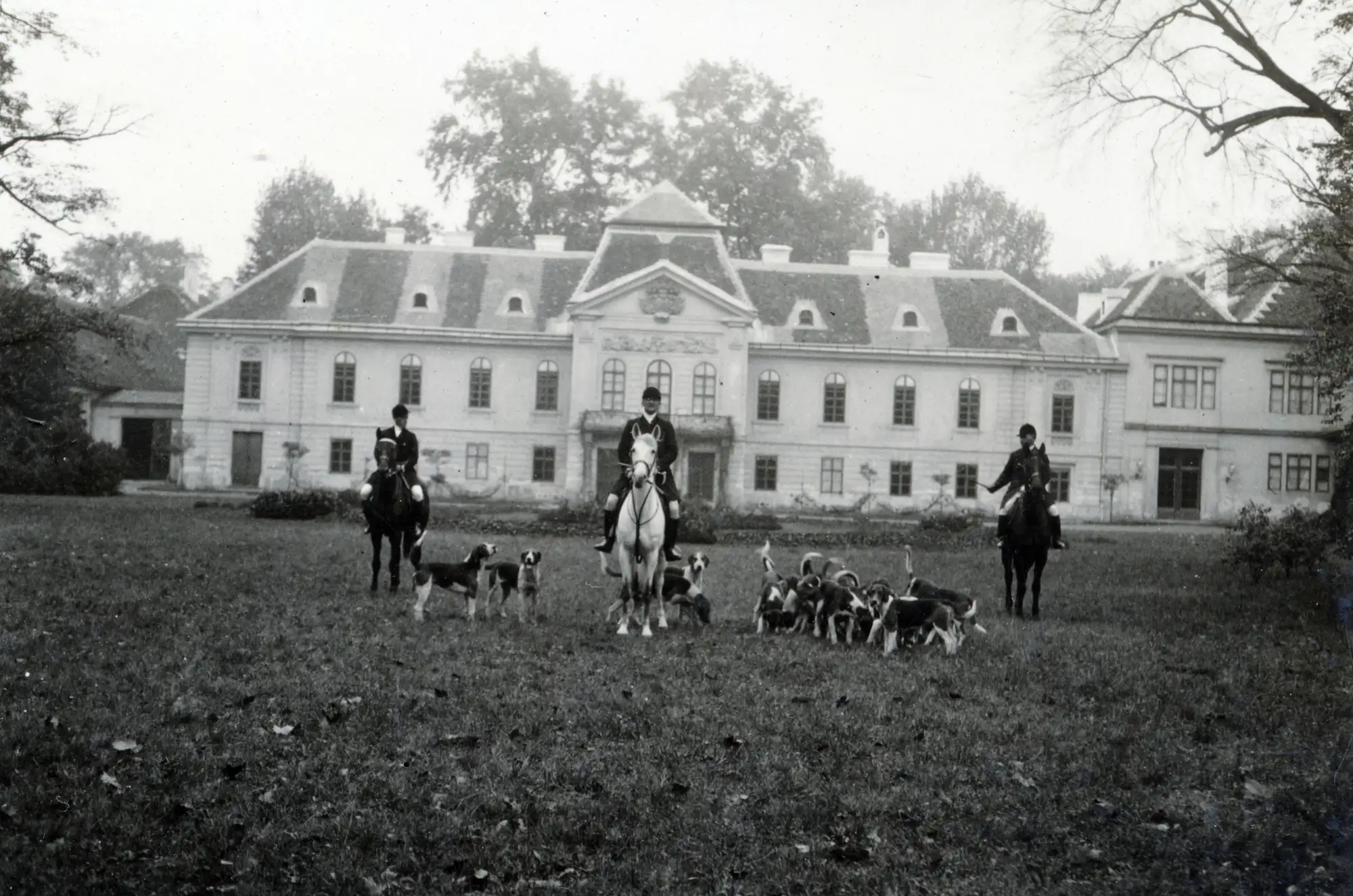
Zichy-Meskó kastély

The origins of the Zichy family date back to the 1260s. At that time, the family bore the surname Zayk, tracing its lineage to Gál Zayk, and lived in the settlements of Zajk1 and Zics2 in Zala County. During the 14th century, the family adopted the name de Zich, from which the modern surname Zichy evolved. Elek Zichy served as Deputy Lord Lieutenant of Zala County, while his son Sigismund laid the foundations of the family's wealth through a fortunate marriage. The family was granted noble status by King Béla IV in the 13th century. From the 14th century onward, members of the family continuously held important public offices, including those of deputy lord lieutenant and deputy palatine. By the 16th century, the Zichys ranked among the great landowning families of Hungary. In the 17th century, they were first elevated to the rank of baron and later, in 1679, to the rank of count3. Together with the comital title, Count István Zichy I received Vázsony Castle and its surrounding estate. His descendants continued the comital branch of the family, while György Zichy and his son Mihály carried on the lesser noble branch, marking the division of the family into two distinct lines.
Zichy Castle – Soponya

The Zichy family played an exceptionally important role in Hungarian public life for centuries. Its members served as deputy lord lieutenants, major landowners, politicians, artists, and influential public figures. Their wealth and noble status enabled them to build numerous castles and manor houses throughout Hungary. However, the prosperity accumulated over generations was abruptly destroyed following the Second World War. During the wave of nationalization, the family's estates and residences were confiscated, leaving many members dispossessed and effectively homeless.
Today, Zichy castles can be found in several regions of Hungary, including:
– Fejér County: Aba, Seregélyes, Kálóz, Soponya, Vajta, Zichyújfalu, Aba-Felsőszentiván, Sárbogárd, Tác, Sárszentmihály
– Somogy County: Lengyeltóti, Zákányfalu, Nágocs, Zala
– Veszprém County: Nagyvázsony, Somlószőlős, Várpalota, Úrkút–Zsófipuszta
– Zala County: Budafapuszta
– Budapest (District III, Óbuda): today operating as a museum
– Pest vármegyében (Zsámbék) Hajdú-Bihar vármegyében (Hosszúpályi, Tetétlen)
– Győr-Moson-Sopron vármegyében (Rajka)
– Baranya vármegyében (Somogyhárság)
– Nógrád vármegyeében
Zichy Castle – Óbuda

Many of these castles have unfortunately fallen into abandonment and ruin. Fortunately, some have found dedicated new owners who have given these former aristocratic residences a new purpose. Today, several serve as schools, memorial houses, museums, hotels, town halls, or cultural centres. We hope that in the coming years, Magyar Villák Magazin will have the opportunity to present more of the remarkable architectural heritage left behind by the Zichy family.