



- Noémi Vizi
- Photos: Csorba Dániel
- Reading time: 3 minutes
The Telbisz Mansion and Estate in Magyarbánhegyes
Continuing our journey through the south-eastern part of the country, we discovered Magyarbánhegyes and the Telbisz Mansion. The area may have already been inhabited before the Hungarian conquest, as archaeological finds testify. Until the middle of the 15th century, it was known as Bánhegyes1. The origin of the name can be traced back to János Maróti, the Ban of Macsó. The prefix “bán” refers to his title, while “hegyes” – as is often the case in the Great Plain, where even a larger mound can be considered a “mountain” in name – refers to a meadow used for haymaking. Thus, the area was regarded as the meadow belonging to the ban. Later, King Matthias Corvinus donated Bánhegyes, Battonya, Dombegyház and Kupa to his mother, Erzsébet Szilágyi. After her death, these lands were inherited by Matthias Corvinus’s son, John Corvinus2.
The story of the creation of Magyarbánhegyes is the following: in 1860, due to the heavy burden of compulsory labour (robot), 900 farmers escaped from Nagyiratos and established the village of Magyar-Bánhegyes in Pusztabánhegyes, which belonged administratively to Mezőkovácsháza. They marked the foundation of the settlement with their official seal. Four years later, it was recognised as an independent settlement. Geographically, the former Bánhegyes cannot be considered the birthplace of today’s Magyarbánhegyes, as the new settlement was established directly next to it.
Moving forward in time, the next important milestone was 1903, when four smaller outlying estates were annexed to Magyarbánhegyes: Hári, Mandel, Telbisz and Vertán. This significantly increased the size of the settlement, which gained extensive surrounding lands. Traces of this history can still be found today. We also discovered this heritage when we arrived at the Telbisz farm junction near Magyarbánhegyes, located approximately 40 km from Békéscsaba.


The name Telbisz refers to landowner Ottomár Telbisz and his family. Unfortunately, we were unable to find information about the previous and following generations, but it is certain that his father was also a landowner. Ottomár was born in 1884, and after completing his agricultural studies, he moved to Magyarbánhegyes in 1906. From 1908 until his death in 1918, he managed the family estates3. He held several influential positions, including membership in the county administrative committee, the representative body of Magyarbánhegyes, the board of the Őscsanád Savings Bank, and the board of the Magyarbánhegyes Savings Bank and Trading Company4. In the following, we present the mansion and estate built in 1942 for his wife and descendants, which has since been renovated and modernised.


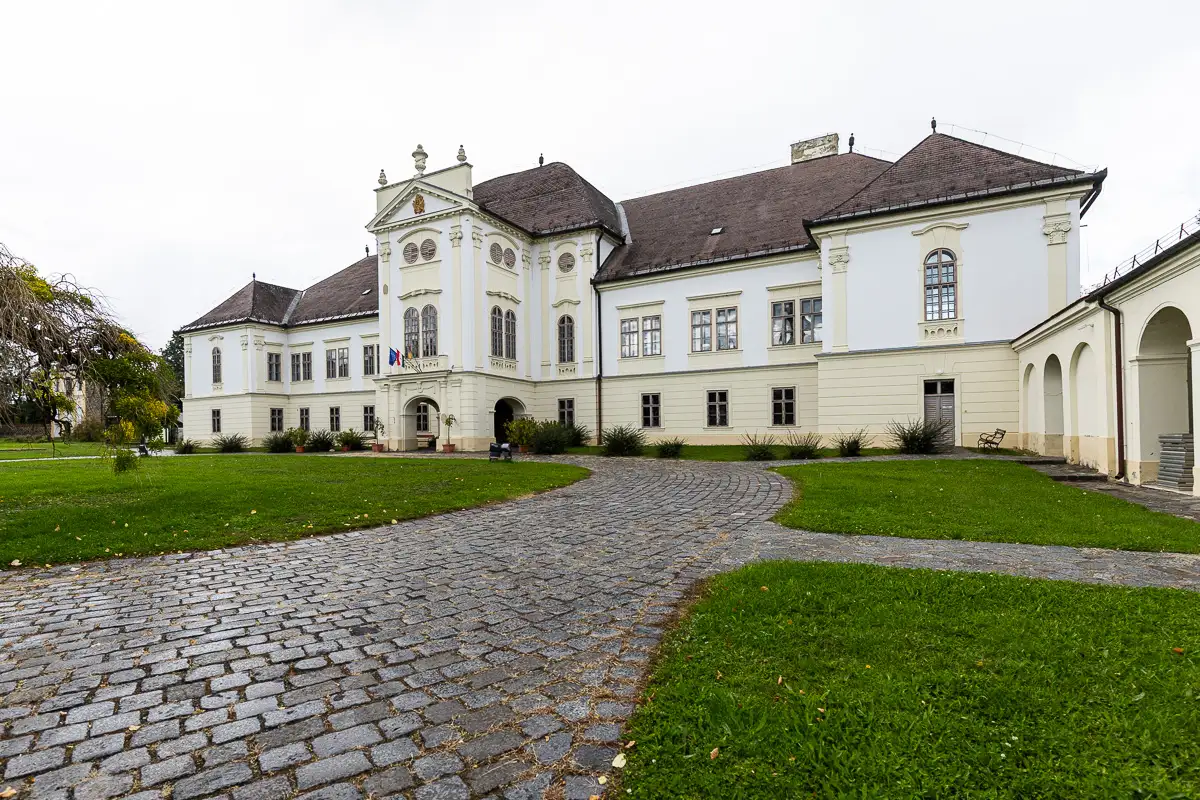
fThe three-storey mansion was designed by Ferenc Glatz, with comfort and harmony as the most important considerations. Two rooms are located on the ground floor and three on the upper floor, two of which open directly onto the terrace above. The view is beautiful at every time of day, overlooking the trees and the surrounding canopy. Regarding the interior spaces, each entrance has its own hallway and corridor, leading to the living room and the lounge. An open marble fireplace creates an even more atmospheric environment, while the burgundy-coloured seating furniture reminiscent of the historical period and the crystal chandelier enchant both residents and guests. Several rooms feature stoves and decorative fireplaces, while the mansion itself is heated by a modern central heating system. The wooden kitchen furniture was specially designed for the building, and the kitchen appliances were integrated into the space. The result is an elegant yet natural atmosphere that perfectly matches the character of the mansion. A cellar is also located beneath the residential level.


One of the manor's exterior walls is adorned with a Marian icon, which was officially listed as a protected cultural monument in 2004. Viewed from a distance, the elegant mansard roof becomes particularly striking. Beyond the house lies a peaceful forest of approximately 2,000 acacia trees, offering complete privacy and shielding the estate from outside view. An outdoor swimming pool provides an ideal setting for private gatherings and entertaining family and friends.


The estate also includes a farm complex designed for keeping livestock. Numerous outbuildings were constructed specifically for agricultural purposes. A stable accommodates horses and is also suitable for professional boarding services. Several garages are located near the manor, including one for passenger vehicles and another designed for agricultural machinery and equipment.
The Telbisz Mansion and Estate is a true hidden gem among Hungarian manor houses, offering the perfect setting for a countryside lifestyle that meets modern expectations. The property is currently for sale; further information can be requested at hello@dandan.hu.