


-
 Written by:
Noémi Vizi
Written by:
Noémi Vizi
- Photos: Csorba Dániel
- Reading time: 3 minutes

Podmaniczky Castle of Fenyőharaszti
How did one of Hungary's most renowned livestock-breeding estates of the late 19th century become, after the Second World War, a sugar factory estate, a student training farm, a chemical storage facility, and even a retirement home for circus animals—before finally being transformed into a four-star castle hotel? The story is complex and full of twists, but today Podmaniczky Castle once again shines in its former splendour. The estate is located in Verseg–Fenyőharasztpuszta, in Pest County, a place named after the native fern ("haraszt") that once covered the area.
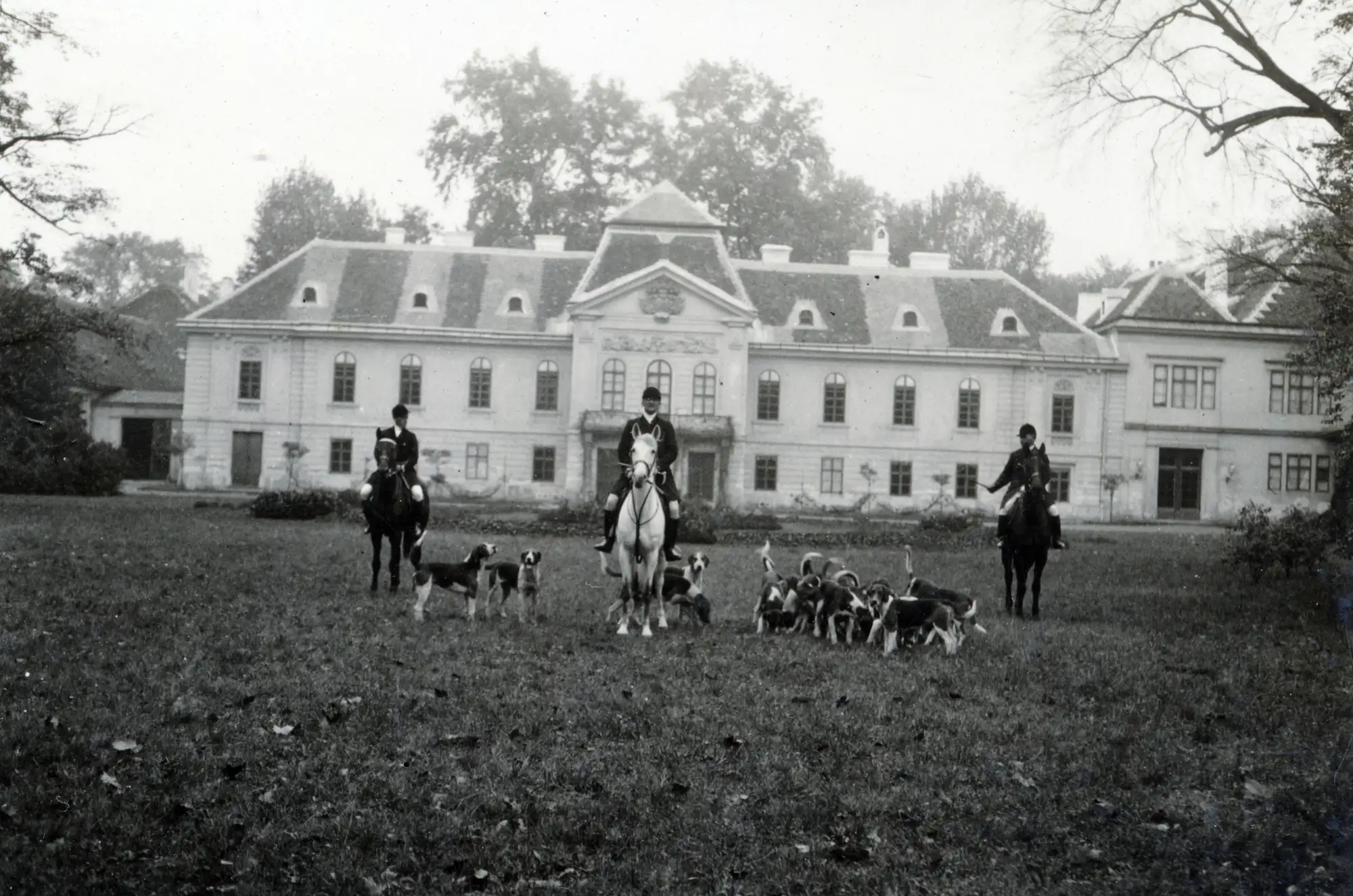
Let us turn back the pages of history to the earliest documented chapter in the story of the Podmaniczky family. In the 14th century, members of the family served as spear-bearing guards at Vágh-Beszterce Castle, already holding noble status at that time. Later, Empress Maria Theresa granted them the title of Baron, although they were only able to officially use this title from 1783 onwards, as the hereditary barony did not exist previously. The family's connection to Fenyőharaszt began in the 1780s, when János Podmaniczky settled on the estate. Between 1783 and 1807, houses were built for the estate workers and the necessary farm buildings were completed. At that time, however, the owners did not live there permanently; they regarded the property primarily as an agricultural estate. The castle acquired its present appearance in 1868, when it was rebuilt in the Neoclassical style.


The estate changed hands several times—even serving at one point to settle gambling debts—but eventually it came into the ownership of Levente Podmaniczky, who, together with his wife Magdolna Podmaniczky, dreamed of turning it into an exceptional country estate. (Yes, as you may have guessed, they were first cousins. Nevertheless, they enjoyed a happy marriage for almost forty years, until Magdolna's death.) Magdolna possessed considerable wealth, enabling the couple to realise virtually all of their plans for the estate. Before long, the manor was bustling with activity. Although there were no children to fill the grounds with laughter, between 80 and 120 servants and employees worked on the estate. Only the animals outnumbered the staff. Levente was one of Hungary's best-known and most respected livestock breeders. His estate produced some of the country's finest horses and greyhounds, while he also bred Beagle dogs. Together with his cousin Géza Podmaniczky, he led the county hunting and sporting association and established the tradition of hosting the prestigious annual hunting ball at Fenyőharaszt, marking the close of the hunting season for the Hungarian nobility. By the 1880s and 1890s, the castle had entered its golden age. Besides its internationally recognised achievements in animal breeding, the ornamental gardens also received numerous awards. The family's reputation was further enhanced by its library of around one thousand volumes, its collections of weapons and porcelain, and an outstanding collection of graphic prints assembled by Magdolna's father, László, during his travels. Fortunately, these graphic works were later transferred to the Museum of Fine Arts in Budapest, ensuring their preservation.
Magdolna passed away in 1903. After her death, Levente lived in seclusion at the castle until his own death ten years later. As the couple had no children, the estate was inherited by their nieces, who eventually sold it to Endre Hatvany-Deutsch, whose family owned the Hatvan Sugar Factory, the foundation of their considerable fortune. By this time, the estate had already begun to lose much of its aristocratic splendour. It was transformed into an agricultural production estate—albeit one of the most advanced in Hungary. During the First World War, prisoners of war provided much of the labour force, and the estate became an important supplier to the country's sugar industry. The real decline came after the Second World War, when the estate was first occupied by German and later Soviet troops. At that time it was still owned by the Hatvany-Deutsch family, who leased it to the Hungarian Seed Production Company, thereby saving it from nationalisation. In the following decades, the estate served many different purposes. It once again became a sugar factory farm, later a student dormitory and training centre. When the buildings were no longer suitable for residential use, they were converted into a pesticide storage facility. At various times, the estate also functioned as a pig farm and even as a retirement home for former circus animals.


A new chapter in the history of Podmaniczky Castle began in 1986. The neglected and deteriorating building was purchased by the Chemolimpex Company, which commissioned architect István Ferencz to carry out a historically faithful restoration. Since 1994, the castle has operated as a charming castle hotel set in the heart of a 13-hectare historic park. Today it welcomes guests with 26 authentically furnished rooms, a wellness area, and a peaceful natural setting—ideal for those seeking relaxation or wishing to celebrate their wedding in an elegant historic environment. The castle hotel is also an excellent venue for team-building events, corporate meetings and smaller conferences, offering facilities that comfortably meet these needs.
Castle history collected by Alice Mezey – art historian (We would like to thank the Podmaniczky Castle Hotel for providing us with the research report.)
History of the manor house collected by art historian Alice D. Mezey
https://www.latvany-terkep.hu/magyar/oldalak/podmaniczky_kastely