




- Noémi Vizi
- Photos: Bagatelle Gardenhouse
- Reading time: 4 minutes
Bagatelle Gardenhouse – Preserving Heritage with Contemporary Elegance
We are at 17 Németvölgyi Road in Budapest, standing in front of a beautifully restored historic villa that now operates as a home hotel. From the outside, it is impossible to imagine the enchanting garden hidden within its inner courtyard. The owners are Ágnes Wirtz and her husband, Albrecht, who also own the neighboring Bagatelle Villa and Brót Bakery, as well as Brót by Villa Bagatelle at MOM Park. What fewer people know is that in 2010, when Villa Bagatelle first opened its doors, the Világszép Child Protection Foundation was also established. The foundation brings joy and care to children who grow up not with their parents, but in foster families or children's homes1. They receive attention, love, and opportunities through camps, mentoring programs, storytelling events, career guidance, and crisis support, helping them discover that although they are growing up without their biological families, "the world can still be beautiful and full of opportunities." For the Wirtz family, supporting vulnerable children and breathing new life into historic villas are equally important missions.


But first, let us discover the story of the villa and the family who originally built it. The Jewish Semler family had been involved in the textile trade for five generations, having established their business in the mid-19th century2. In addition to Budapest, they operated in London, Paris, Zurich, Philadelphia, Toronto, and New York. Thanks to their activities, the finest quality English wool fabrics became widely available in Hungary. Elemér Semler commissioned Tibor Szivessy, one of the era's most renowned architects, to design the villa as a home for his wife, Erzsébet Epstein, and their children, Éva and Sándor. Erzsébet herself came from a family with a long tradition of distinguished physicians. Unfortunately, their happiness was short-lived. Because of their Jewish origins, the family soon became victims of persecution. In March 1944, Sándor completed his secondary school graduation exams early, but by then he was already forced to wear the yellow star3. The eighteen-year-old was conscripted into forced labor service, and the last known photograph4 of him was taken at that time. He died on January 11, 1945, in the Ohrdruf concentration camp. In June 1944, the Semler family was evicted from their home on Németvölgyi Road and forced into the Budapest ghetto. This is the last documented information about them. The history of the Semler family was researched by journalist Eszter Kiss.
Following the eviction, the villa was nationalized and functioned as an apartment building for decades5. Year after year, its condition deteriorated until the Wirtz family brought about a turning point in its history. The restoration was largely shaped by architects László Benczúr and Miklós Weichinger, who designed the rehabilitation, while the interior design was created by Edit Móder. The acclaimed architectural team placed heritage preservation and the communication of architectural values at the center of the project. As a result, they proposed only minimal alterations, focusing primarily on creating a harmonious relationship between the terrace, the garden, and the living spaces. The original stone-columned terrace was enclosed, forming a seamless connection between the covered arcade veranda and the indoor living area6.
In the 1930s, architecture generally emphasized outward representation and prestige. The Semler Villa was exceptional because it broke with this convention, placing the emphasis instead on the private garden that created an intimate living environment, anticipating the ideals of modern residential design7. The name Gardenhouse derives from this remarkable garden behind the villa. It welcomes visitors into an enchanting world where every season reveals a different palette of colors, flowers, and plants.

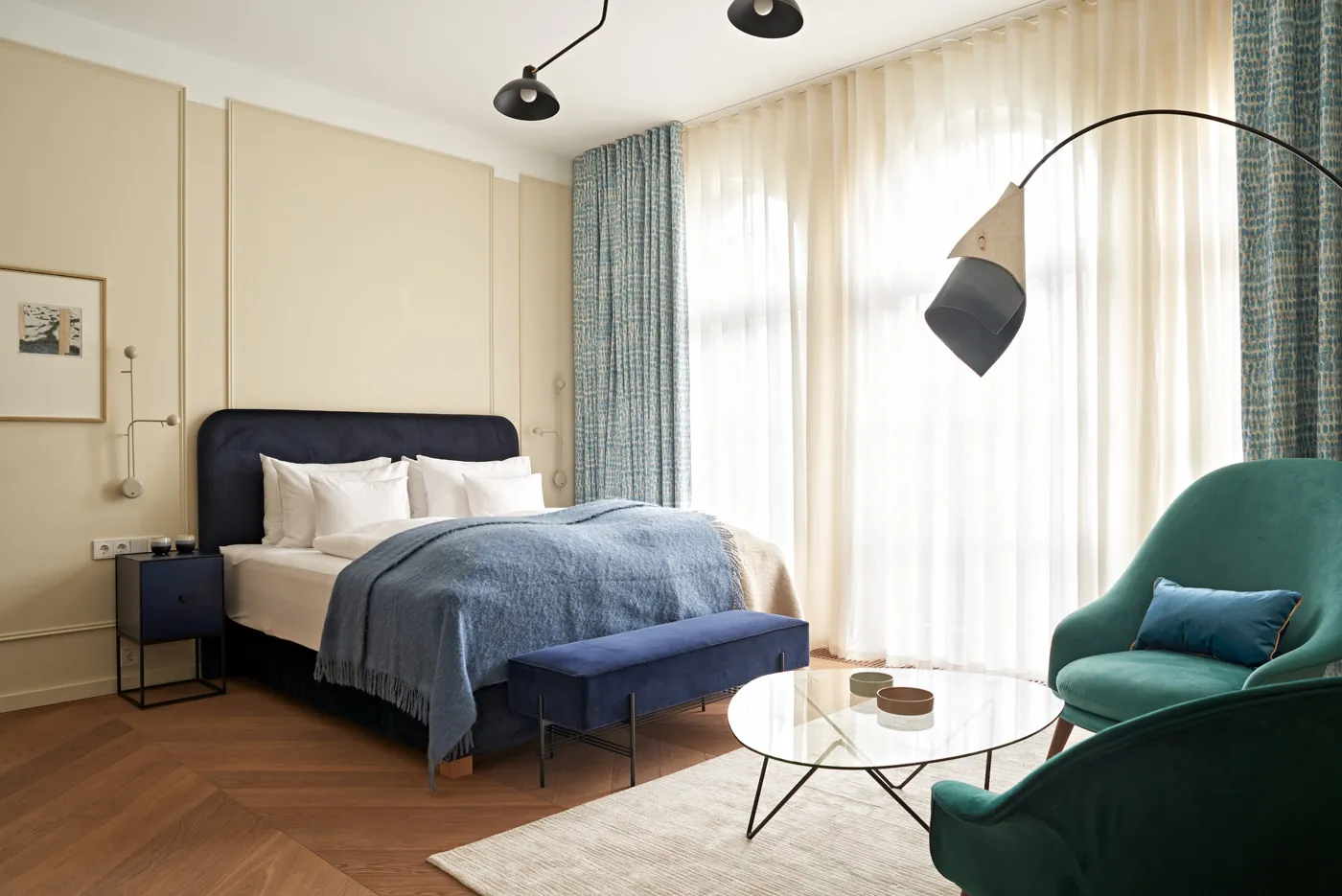
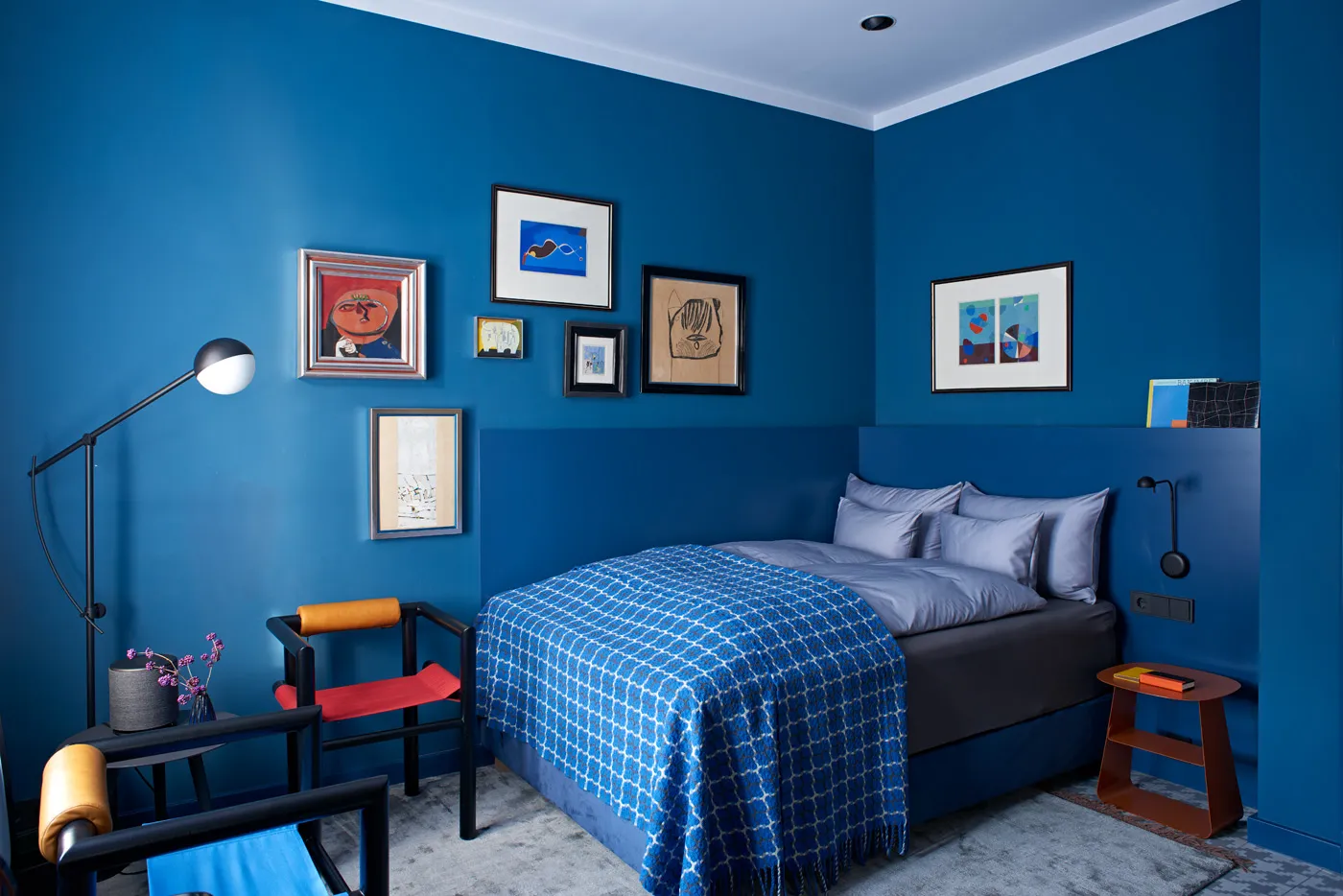
The Bagatelle Gardenhouse is truly unique, as each of its six rooms has a completely different atmosphere, and even their names are far from ordinary: Letter, Laurel, Nightingale, Palette, Rhapsody, and Limelight. Each room is connected to the personal memories of Ágnes and Albrecht Wirtz. Rhapsody, for example, recalls the beginning of their love story, when Albrecht connected with Budapest’s cultural life through music. The suite features a spacious balcony overlooking the enchanting garden. Letter refers to Hungarian, English, and German books and publications. Its bay window has been transformed into a cozy reading nook, symbolizing the period when Albrecht sought to get to know Ágnes better through her favorite books. Palette is dedicated to Erzsébet Vojnich, one of Ágnes’s favorite painters. Several of her artworks are displayed in the room. Limelight pays tribute to Ágnes’s grandparents, who were actors, preserving the memory of their theatrical careers.
The furniture, decorative objects, and artworks throughout the house are the creations of contemporary designers and artists. It was important for the owners to provide a platform for lesser-known Hungarian artists while allowing guests to experience paintings and sculptures as part of everyday living spaces rather than behind museum glass. Their goal was to create a timeless sense of elegance. The distinctive lighting fixtures were designed by Virág Albert and Farkas Pongrácz (Blum & Wolf). The hand-knotted rugs are made from New Zealand wool8, created by Krisztina Vándor, who also designed the throws. The ceramic tableware in the dining room was custom-designed specifically for the Gardenhouse by ceramic artist Gábor Somoskői (Kezemura)9.


The rooms deliberately do not include televisions. This was a conscious decision by the owners, who wanted guests to spend less time watching TV in their rooms and instead enjoy conversations in the shared spaces, such as the Gardenroom or the garden itself. Sustainability is another key principle throughout the property. The house operates its own water purification system, providing filtered drinking water that is bottled on-site. The soaps are made from natural ingredients, while the bread and pastries are supplied by the neighboring Brót Bakery10.
The Bagatelle Gardenhouse has become a true hidden gem. If you have the opportunity, we warmly recommend visiting, admiring the miniature replica of the Gardenhouse in the garden—which serves as a bird feeder—and tasting the outstanding artisan baked goods from the Brót Bakery at Villa Bagatelle.
We also warmly recommend watching Dániel Csorba’s short film about the Bagatelle Gardenhouse alongside this article.
If you are looking for a similar villa or manor, please contact us at hello@dandan.hu.
1 https://www.bagatellebudapest.com/hu/r%C3%B3lunk/vilagszep
3 https://www.szombat.org/tortenelem/utolso-ismert-lakhelye-nemetvolgyi-ut-15
4 https://www.szombat.org/tortenelem/utolso-ismert-lakhelye-nemetvolgyi-ut-15
6 https://www.octogon.hu/epiteszet/budapest-uj-kedvence-lehet-a-bagatelle-garden-house/