



- Noémi Vizi
- Photos: Borbély Levente
- Reading time: 2 minutes
The Story of an Episcopal Estate: The History and Heritage of Püspökszentlászló Castle
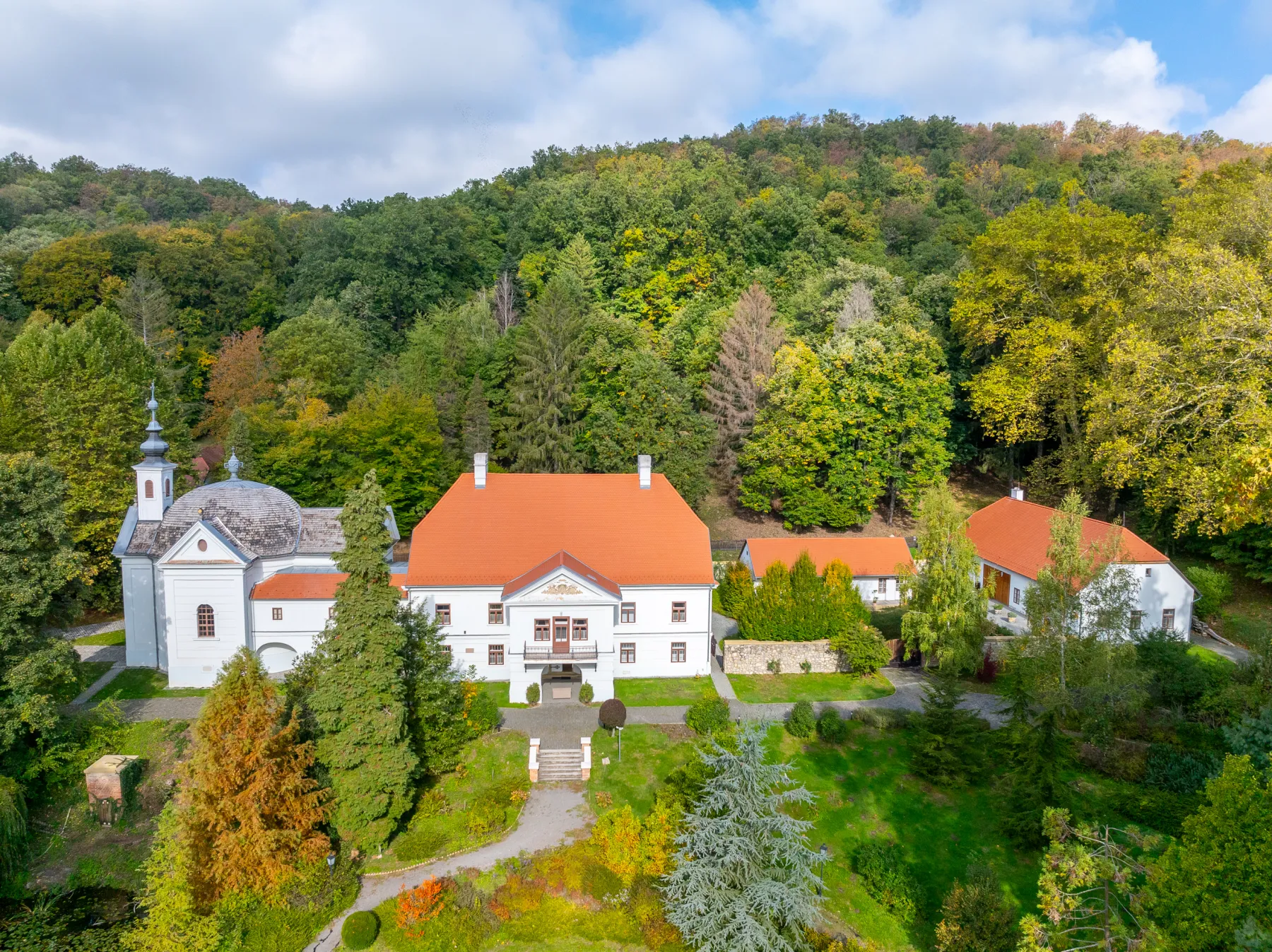
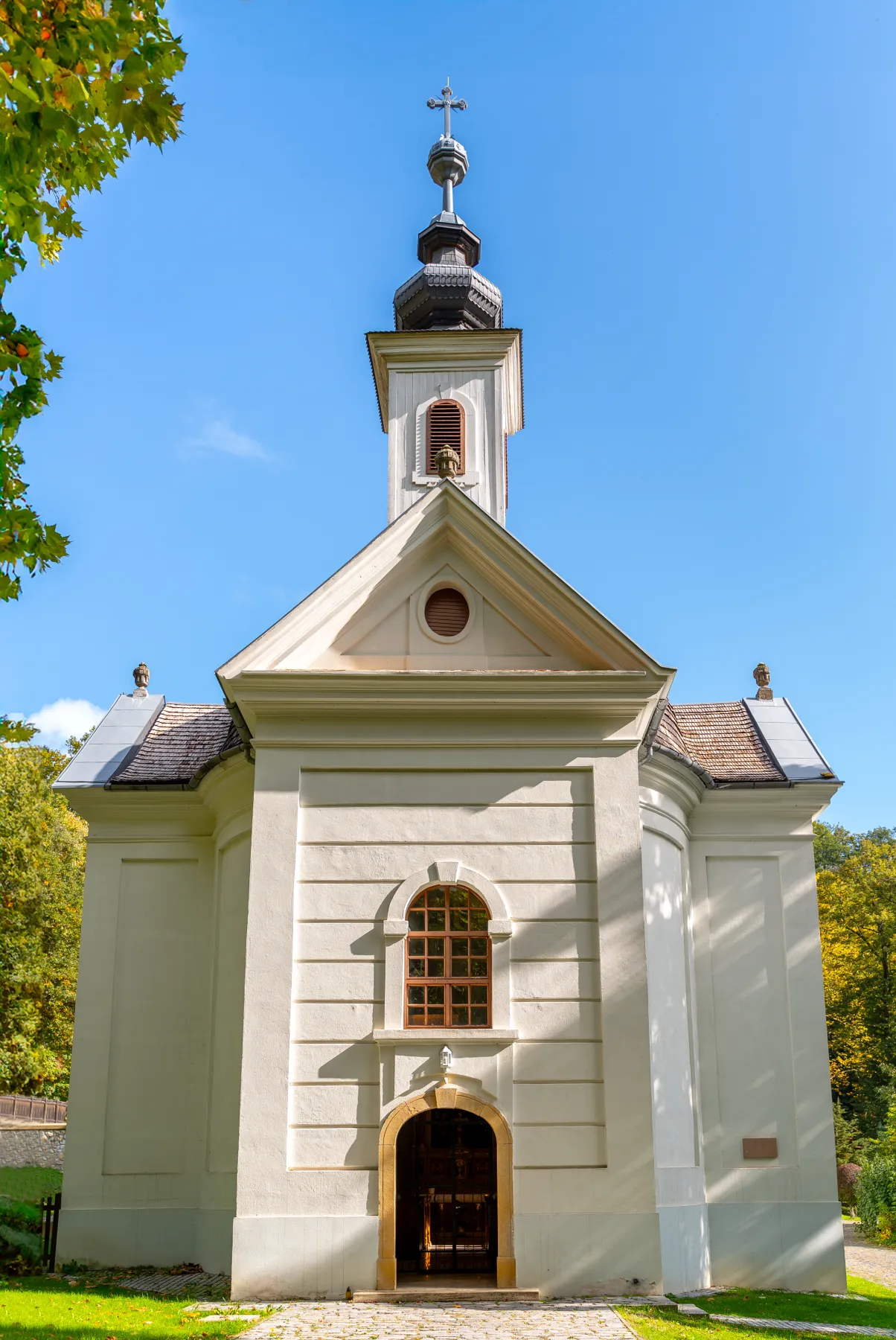
Püspökszentlászló lies in a valley on the northern slopes of Zengő Hill, in the eastern part of the Mecsek Mountains. The village, which has preserved its medieval character, owes much of its development to Bishop Pál Esterházy of Pécs. The settlement was first mentioned in written records in 12351. According to local legend, King Saint Ladislaus was caught in a storm while hunting in the area and sought shelter in a cave. To commemorate this event, he had a chapel built in what was then a village of around thirty households2.
In 1797, Count Pál László Esterházy, Bishop of Pécs, commissioned the construction of a church and an episcopal summer residence on the site of the former chapel. In reality, the intention was to establish a monastery disguised as a summer residence3. The castle is a one-storey Baroque building with a rectangular floor plan. Although its architect remains unknown, the designer was undoubtedly highly experienced in planning aristocratic residences. Particular attention was paid to ensuring magnificent views of the park—already taking shape at the time—from the upper terrace. The estate already featured a fountain and an ornamental fish pond.
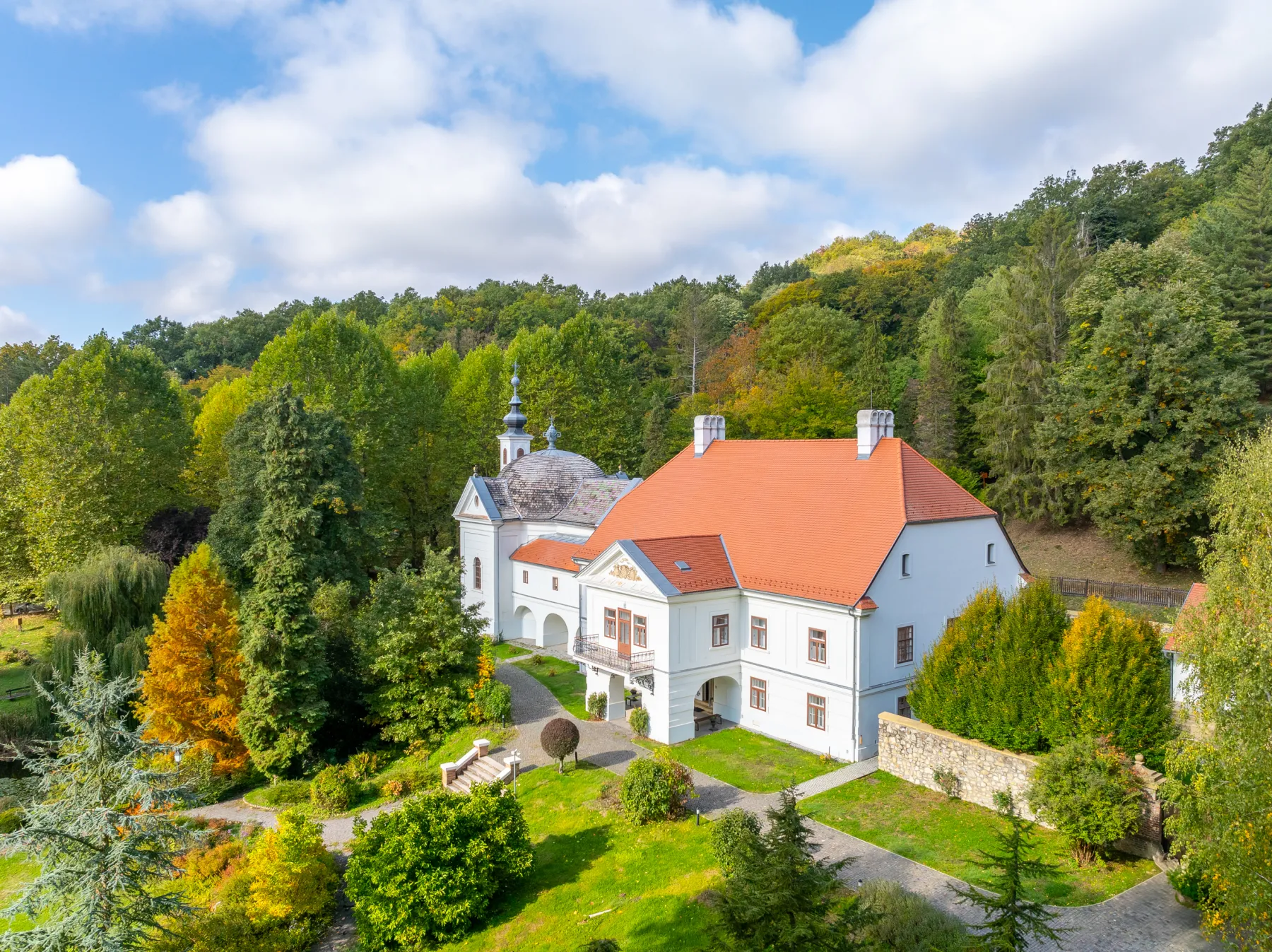
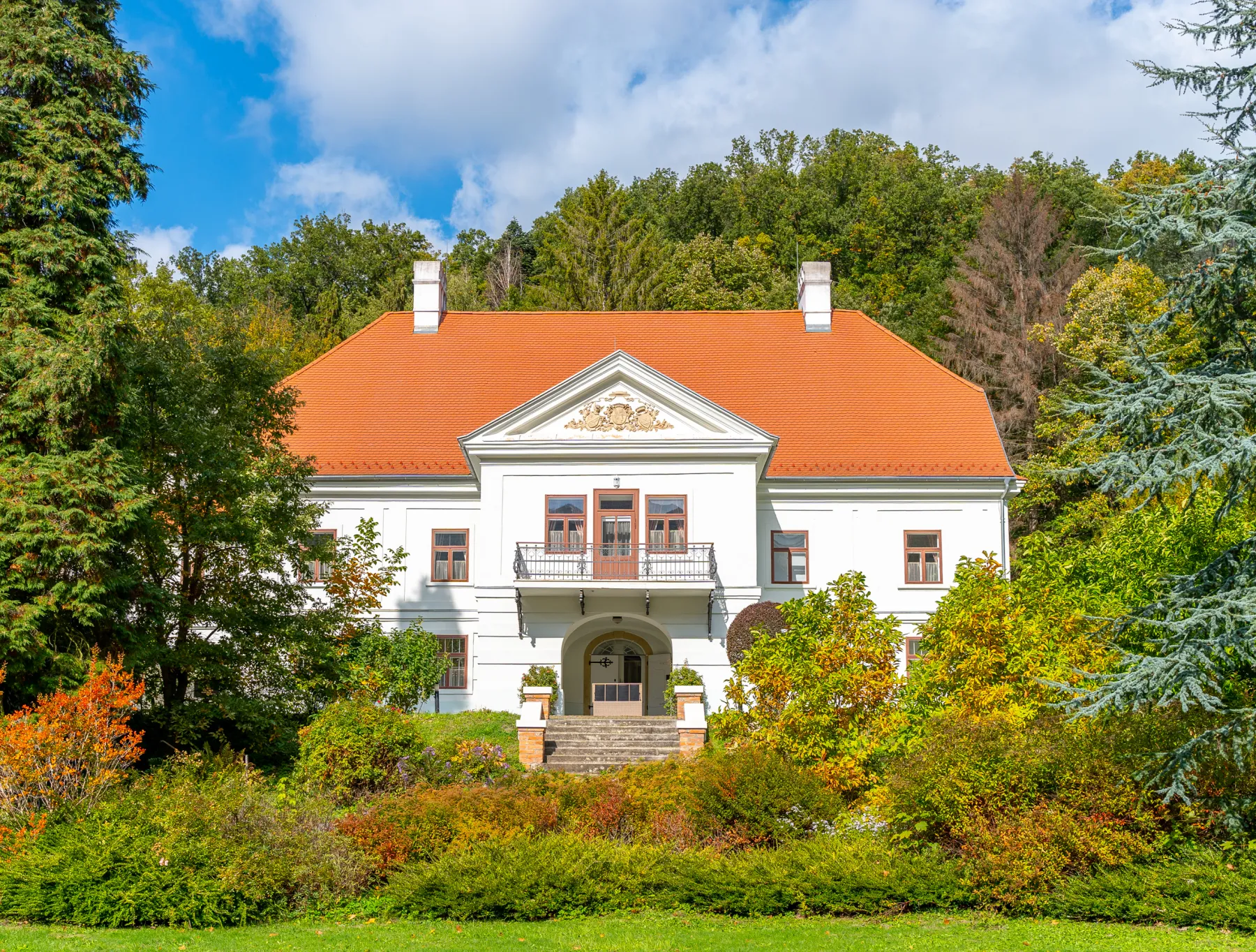
The village has officially borne the name Püspökszentlászló since 1898, and in 1941 it became administratively part of Hosszúhetény. One hundred and one years after the castle's construction, Bishop Sámuel Hetyey of Pécs carried out a complete renovation between March and June 1898 and expanded the estate by purchasing additional land. Separate engine houses supplied electricity and water to the property. The fountain's water jet reached an impressive height of 20 metres, made possible by a reservoir built into the hillside to provide sufficient water pressure5. To ensure the continuous supply of water to the ornamental lake, an ingenious water gallery system was created, collecting rainwater from the surrounding area and directing it into the arboretum. High-quality Zsolnay ceramic pipes were used throughout the water system. It was also Bishop Sámuel Hetyey who established the arboretum in the form visitors see today. Among many remarkable species, it is home to maidenhair trees (Ginkgo biloba), Austrian pines and numerous other botanical treasures. At the end of the 19th century, the trees were planted with a unique vision: once fully grown, visitors walking beneath them would experience the atmosphere of a cathedral. Achieving this required a sophisticated irrigation system across the estate's six-acre grounds. The project was overseen by the episcopal head gardener of the time, Ferenc Hrban. In 1905, Gyula Zichy was appointed Bishop of Pécs. He continued developing the summer residence and established a deer park where roe deer and fallow deer were kept. Around this time, the three coats of arms were also placed on the castle's façade: that of Pál László Esterházy, the founder; Sámuel Hetyey, who directed the extensive 1898 renovation; and Gyula Zichy, during whose episcopate the estate experienced its golden age.
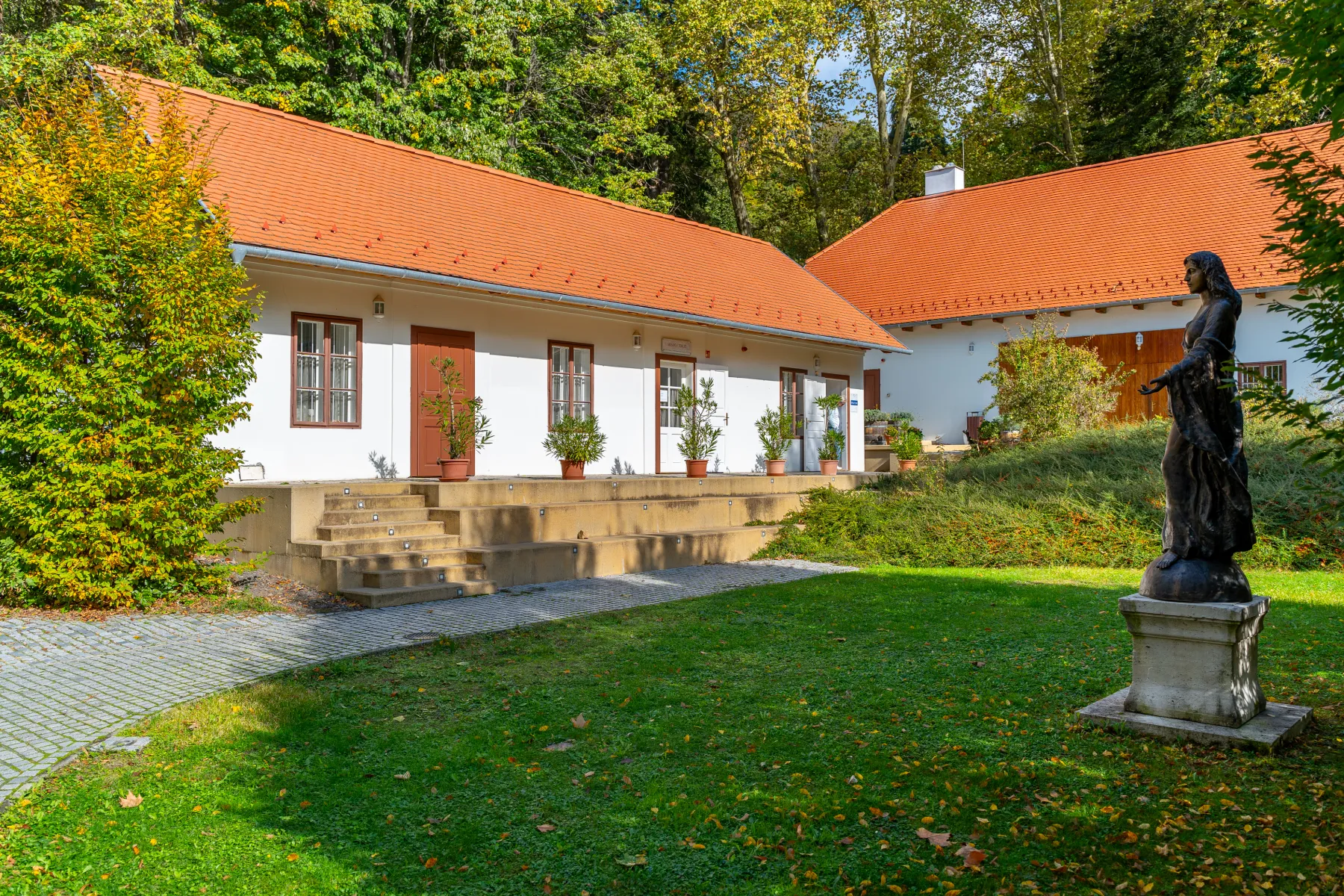
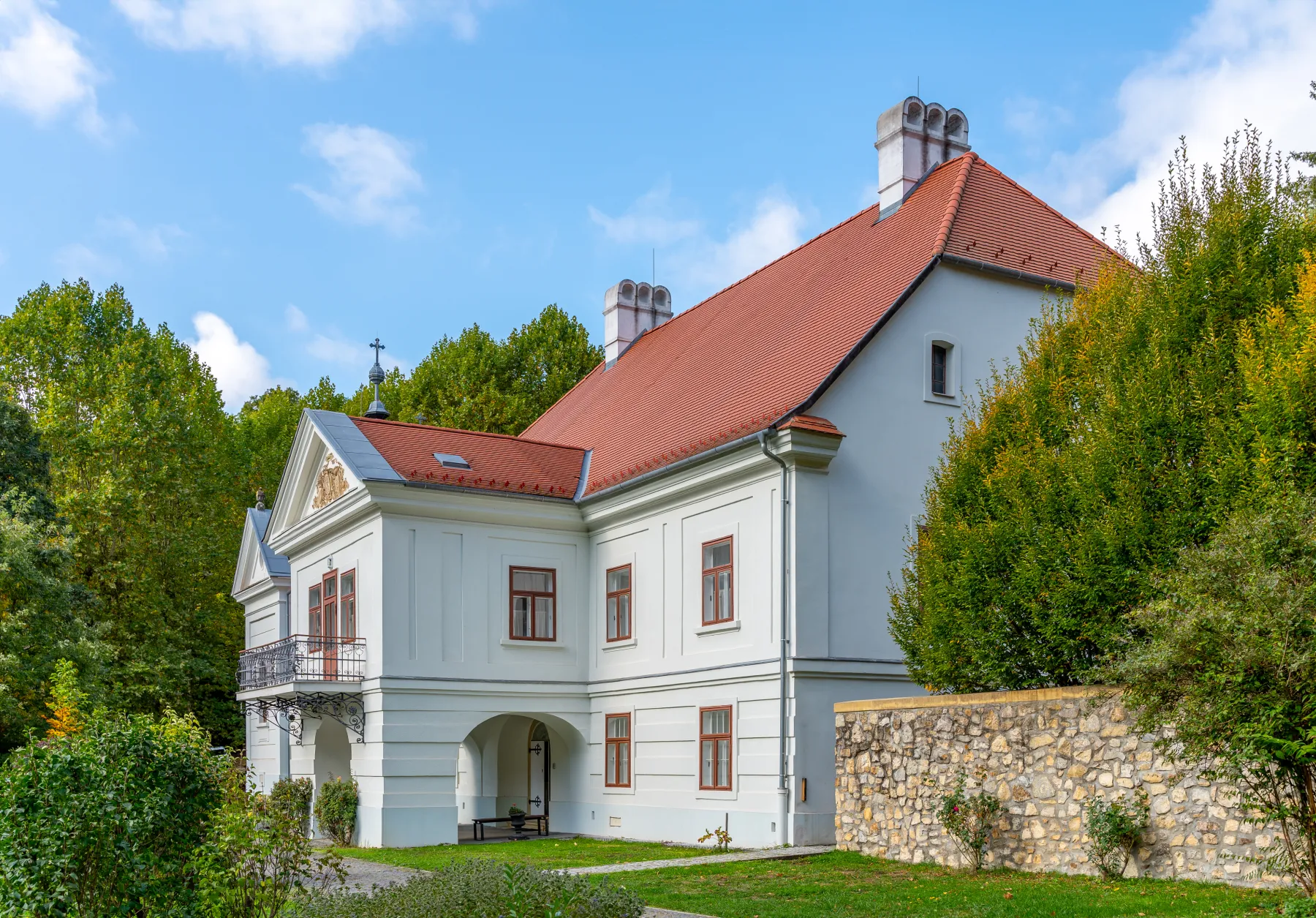
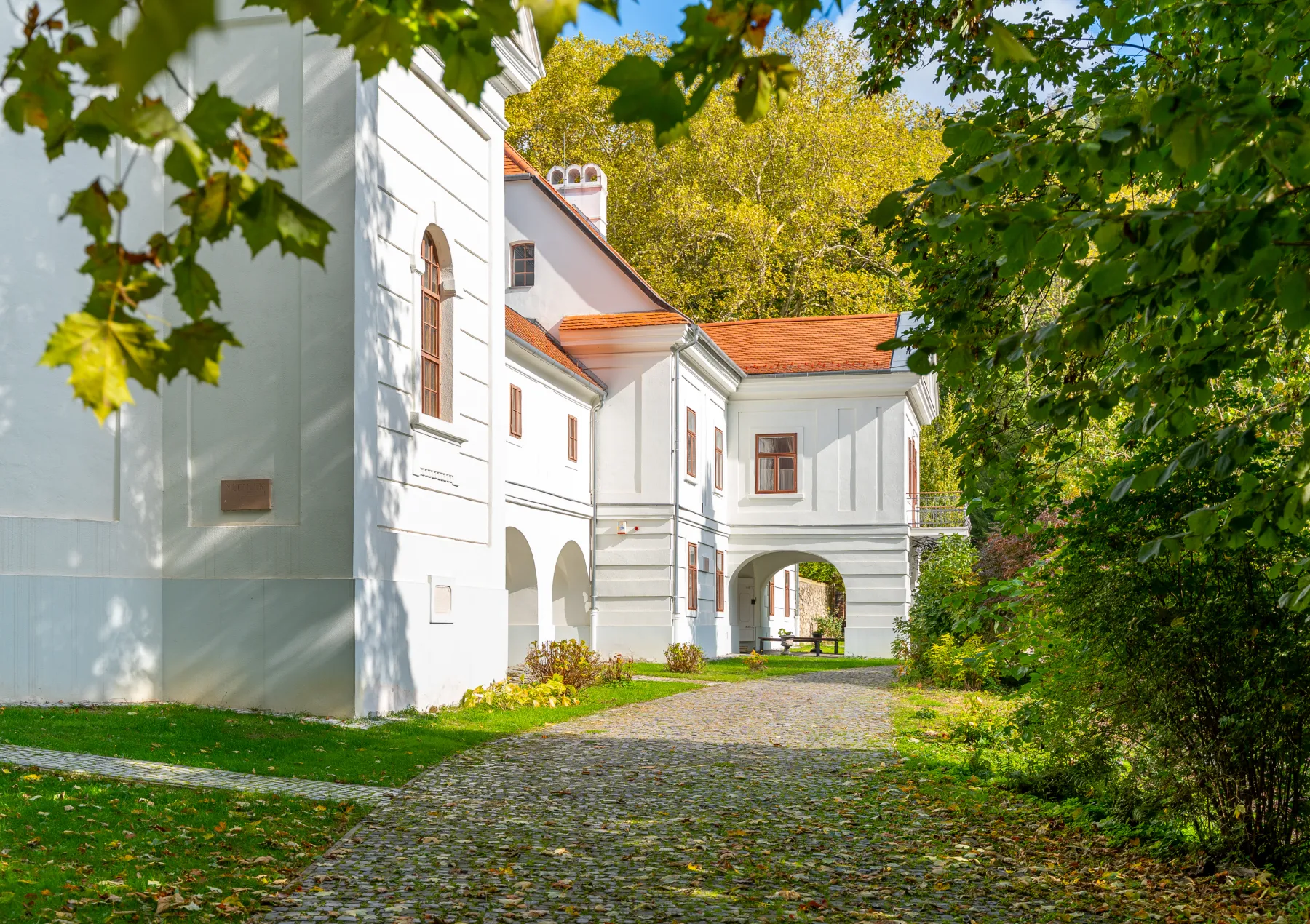
The castle suffered no significant damage during the Second World War. From 1945 onwards, it operated as a tourist hostel, before being returned to the Church. Ursuline sisters who had sought refuge here established an elementary school, a Catholic girls' educational institute, and an orphanage. In 1950, when church-run schools were dissolved, the building was left without residents. On 17 January 1954, Bishop Ferenc Virág declared that the right to use the castle would be transferred to the Church Charity for Pensioners and the Sick, so that it could be operated as a care home.
It is also worth mentioning the connection between Püspökszentlászló Castle and József Mindszenty. In 1944, Mindszenty openly confronted the Szálasi government and spoke out in defence of human life. He was arrested, taken to the prison in Sopronkőhida, and spent the final months of the war under house arrest. In 1948, he was once again prosecuted on fabricated charges—disloyalty and treason—and, after enduring severe torture, was sentenced to life imprisonment. Between February 1949 and 1955, he was held in prison, but as his health deteriorated, he was first transferred to Püspökszentlászló and later to Felsőpetény. At the episcopal castle, two rooms on the upper floor were reserved for him. Shortly afterwards, Archbishop József Grősz of Kalocsa suffered the same fate and was also placed under house arrest here. Following the outbreak of the 1956 Hungarian Revolution, Mindszenty was released. On 3 November, in his famous radio address, he called for the withdrawal of Soviet troops, the investigation of unlawful acts, and the immediate resolution of issues concerning church institutions. After delivering the speech, he sought refuge at the Embassy of the United States in Budapest, where President Dwight D. Eisenhower granted him political asylum. He remained there until 1971, after which, at the request of Pope Paul VI, he moved to the Pázmáneum in Vienna, where he lived until his death in 1975.
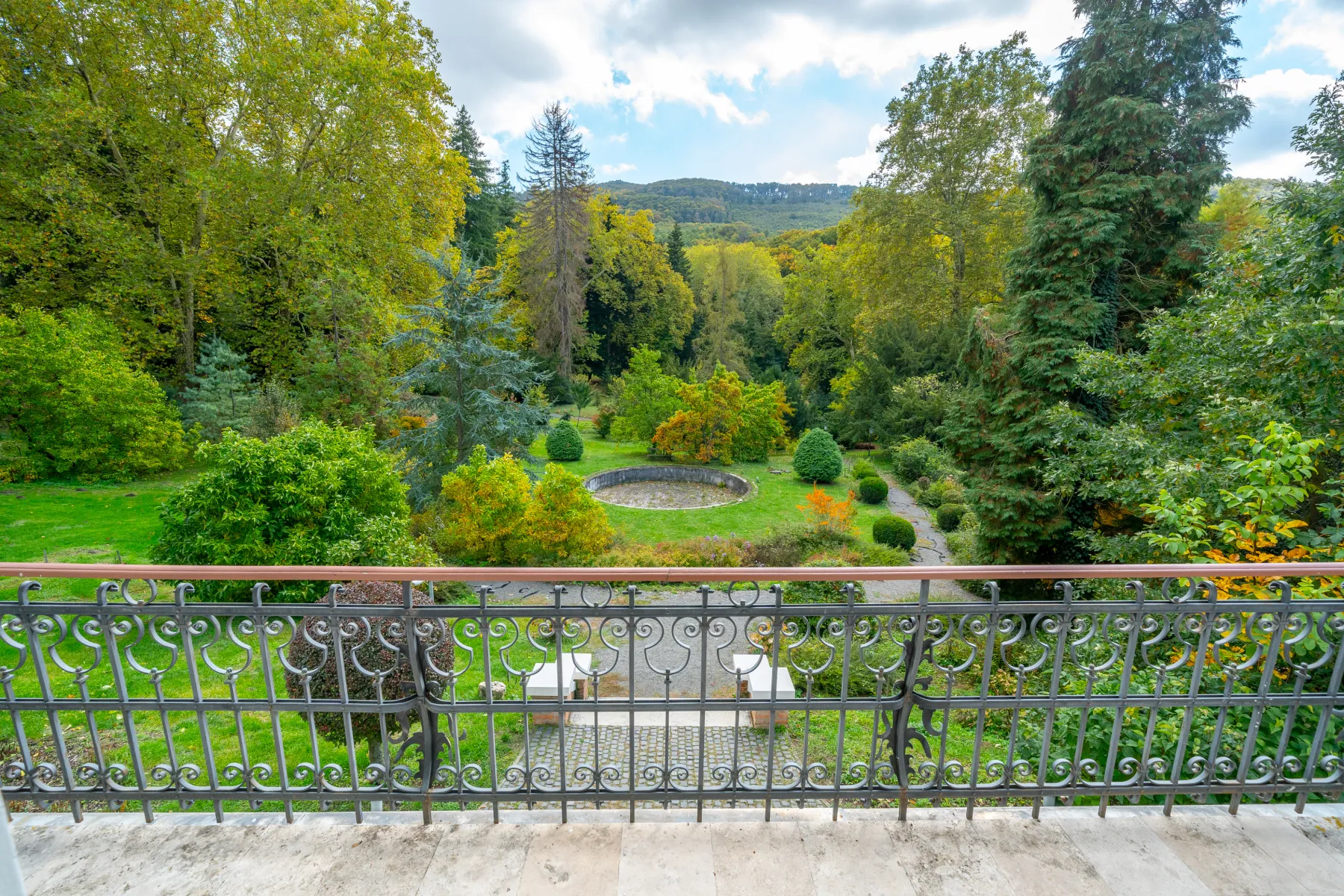
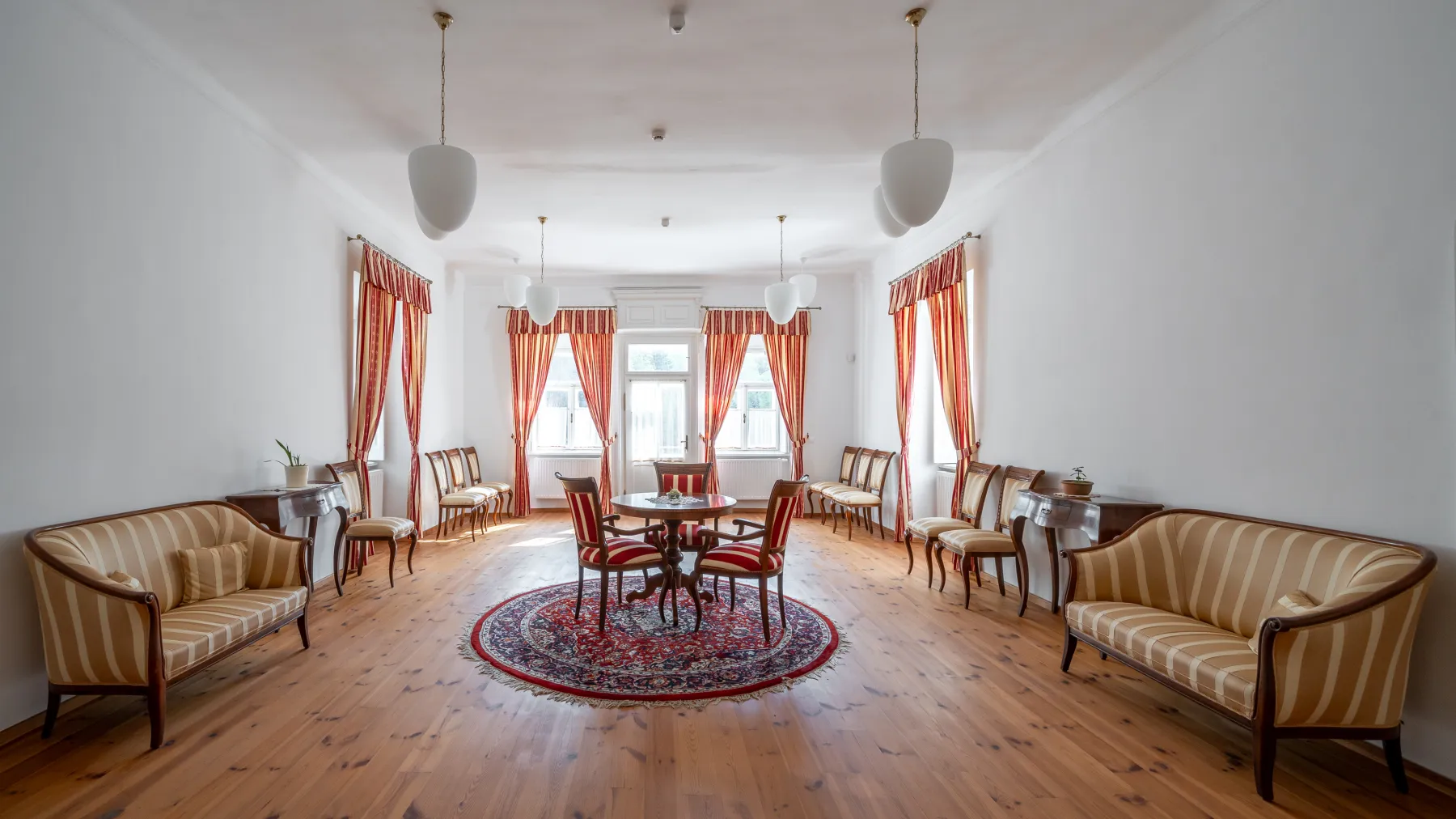
We warmly recommend visiting the Episcopal Castle and Arboretum of Püspökszentlászló. The estate is open to visitors between 15 March and 31 October. The castle itself can only be visited as part of a guided tour, offering guests a deeper insight into the history and present-day life of this remarkable estate.
We would like to express our sincere thanks to the Diocese of Pécs and the Püspökszentlászló Episcopal Castle for making the photography for this article possible.