

- Noémi Vizi
- Photos: Borbély Levente (RECHungary)
- Reading time: 3 minutes
Batthyány-Montenuovo Castle in Bóly
We are in Bóly, a town located 30 km from Pécs and just 15 km from Villány, one of Hungary’s most renowned wine tourism destinations. Although Bóly was officially granted town status only in 1997, archaeological finds indicate that the area has been inhabited since around 3000 BC, during the Neolithic period1. The region is famous for its vineyards, making Bóly a worthwhile stop for anyone exploring Southern Transdanubia’s wine country. The town has a welcoming atmosphere, with tree-lined streets and spacious green areas. Its present-day layout largely dates back to the era of the Batthyány and Montenuovo family in the 1920s
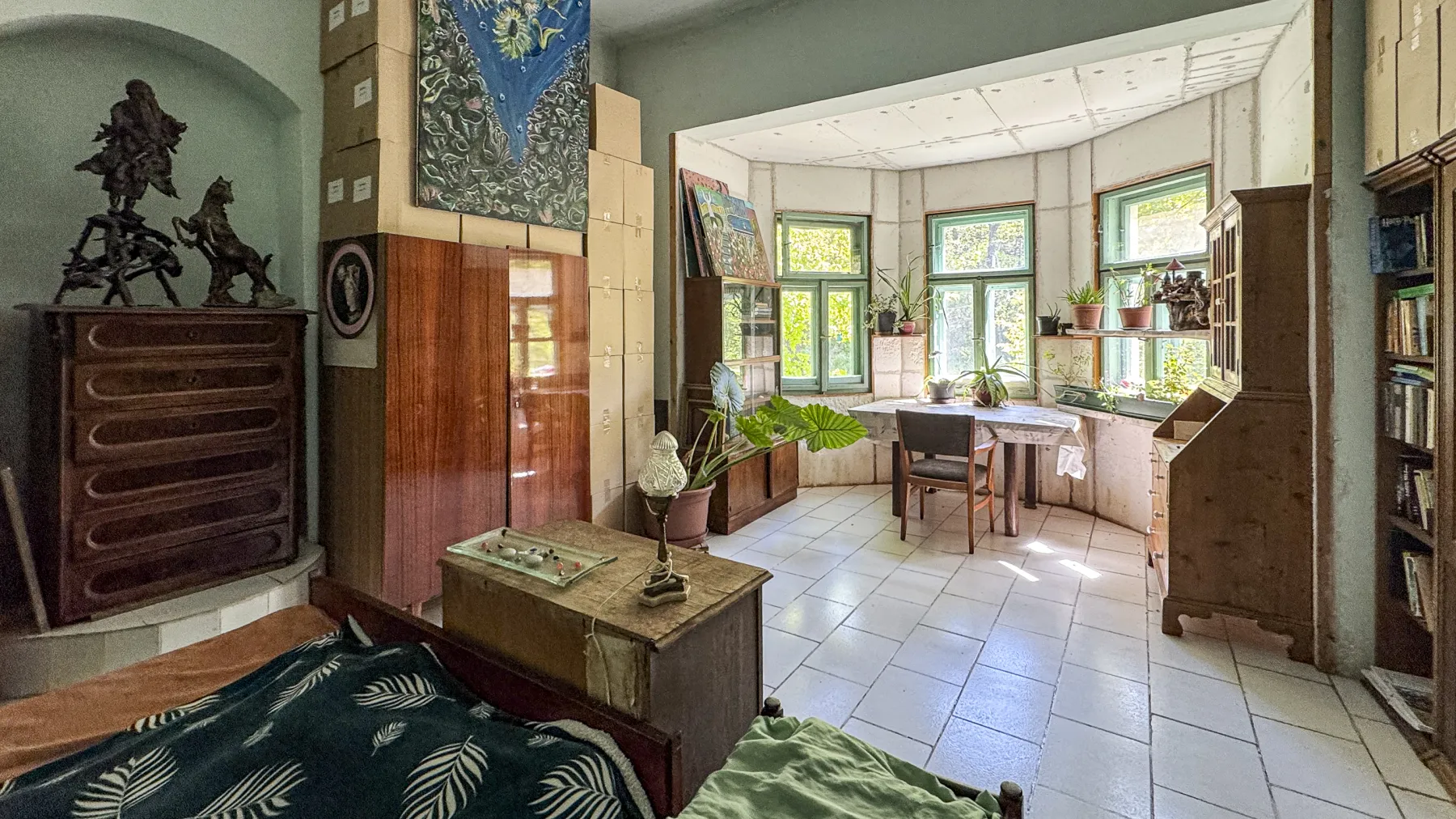
A hunting lodge stood on the estate as early as the 18th century, while the castle acquired its present appearance during extensive reconstruction between 1805 and 1807. Built in the Neoclassical style, it has long been considered the architectural jewel of Bóly and is surrounded by an 11-hectare park. To understand the story of its owners, we must travel back to the imperial court of Vienna in the 1790s. It was then that Archduchess Marie Louise, the eldest child of Emperor Francis II and Maria Theresa of Naples and Sicily, was born. At the age of nineteen, her father arranged her marriage to Napoleon I, who had recently divorced Joséphine in the hope of strengthening France through political alliances. Their son, Napoleon II2, was born in 1811. Despite the political nature of the marriage, the two developed genuine affection for one another, although war and politics ultimately prevented them from sharing a happy life together. From 1812 to 1815, Marie Louise governed France as regent while Napoleon was away on military campaigns. After Napoleon’s exile in 1815, she returned to Vienna with their son. With her father’s support, she later married General Adam Albert von Neipperg, with whom she had two children, Albertine and Wilhelm. Following the general’s death in 1829, she married for a third time. She also brought magnificent Empire-style furniture from her French residence, pieces that would later furnish the castle in Bóly.


Wilhelm von Neipperg enjoyed a distinguished military career. He joined the Austrian Imperial Army at the age of seventeen and, in 1850, married Countess Júlia Batthyány-Strattmann, daughter of Count Iván Batthyány-Strattmann and Countess Mária Esterházy. The couple settled at the Batthyány Castle in Bóly3. During their years here, the town acquired much of its present character, including its broad streets, landscaped green spaces, and the castle’s impressive park. In 1864, Emperor Franz Joseph granted them the title of prince and authorized the family to change its surname from Neipperg to Montenuovo. They had three children: Albertina, Marie, and Alfred. Alfred von Montenuovo and his wife, Franziska von Kinsky, had four children, including their only son, Albert. However, deeply attached to his Hungarian identity, he later adopted the Hungarian name Nándor. After serving throughout the First World War, he returned home to live with his family in the castle at Bóly. Over the years, the original Empire furniture was complemented by an extensive collection of weapons and hunting trophies, reflecting the aristocratic lifestyle of the family.


Agriculture was Prince Nándor’s greatest passion. His dairy farm gained an excellent reputation, and he continuously modernized the estate with the latest agricultural technologies. He introduced steam-powered ploughs and grain binders, installed steam-driven pumps to provide fresh drinking water from the wells, and built water towers that supplied both the castle and the estate buildings. He was also known for his strong moral convictions. He refused to support Hungary’s anti-Jewish laws and even wrote to Regent Miklós Horthy, urging Hungary to withdraw from the Second World War. His opposition had severe consequences: he was arrested by the Arrow Cross regime and deported to a concentration camp5. After the war, the advancing Red Army removed nearly everything of value from the estate, and during the wave of nationalization the family’s remaining properties were confiscated. In 1951, Nándor became the victim of a politically motivated show trial and was sentenced to life imprisonment6. He died the following day in custody, most likely as a result of abuse by the ÁVH, Hungary’s secret police.
Following nationalization, the Batthyány–Montenuovo Castle became state property. Today, it serves as a residential care institution for people with disabilities. Although the building itself is not open to visitors, its beautiful historic park remains accessible, offering a peaceful place for walking and relaxation.
1 https://varos.boly.hu/rolunk/boly-varos-tortenete
2 https://kronika.hu/cikk/hogyan-kerultek-napoleon-empire-butorai-a-bolyi-kastelyba/
3 https://kronika.hu/cikk/hogyan-kerultek-napoleon-empire-butorai-a-bolyi-kastelyba/
4 https://bagyinszki.eu/archives/12819
5 https://kronika.hu/cikk/hogyan-kerultek-napoleon-empire-butorai-a-bolyi-kastelyba/
6 https://kronika.hu/cikk/hogyan-kerultek-napoleon-empire-butorai-a-bolyi-kastelyba/