




- Noémi Vizi
- Photos: Felszeghy Áron
- Reading time: 2 minutes
The Prónay Castle of Romhány
History enthusiasts may already be familiar with the village of Romhány. It was here, on its outskirts, that the final battle of Ferenc II Rákóczi's War of Independence took place. According to local legend, Rákóczi pitched his command tent on the grounds surrounding today's Prónay Castle, directing the battle from this very location1. During the 18th century, Romhány and its surroundings were owned by three noble families: the Sembery, Géczy, and Prónay2 families. In this article, we present the former residence of the Prónay family.
Genealogical research traces the origins of the Prónay family back to the reign of King Béla IV. Even at that time, they possessed considerable estates and political influence3. Over the centuries, family members held county and later national offices, and their loyal service to the Crown was rewarded by King Ferdinand I, who granted them a noble charter.
The Prónay Castle in Romhány was built between 1735 and 1740 at the commission of Gábor I Prónay. During the 19th century, it was expanded with a bathhouse and later with several farm buildings. In 1860, the castle underwent a complete Baroque-style renovation4. The single-storey, rectangular mansion is especially remarkable for its roof, which is entirely unique in Hungary and presented significant engineering challenges during its restoration in 2012. In earlier times, a two-metre-high stone wall enclosed the centuries-old English landscape park, shielding it from curious eyes. The estate featured magnificent trees, walking paths, and even a tennis court for its residents5. The castle's library contained around 1,000 volumes, while its impressive weapons collection was equally noteworthy. The walls were adorned with works by renowned Hungarian painters, including Ferenc Szikszay, Lajos Kubányi, Gyula Zilczer, and Károly Markó6.
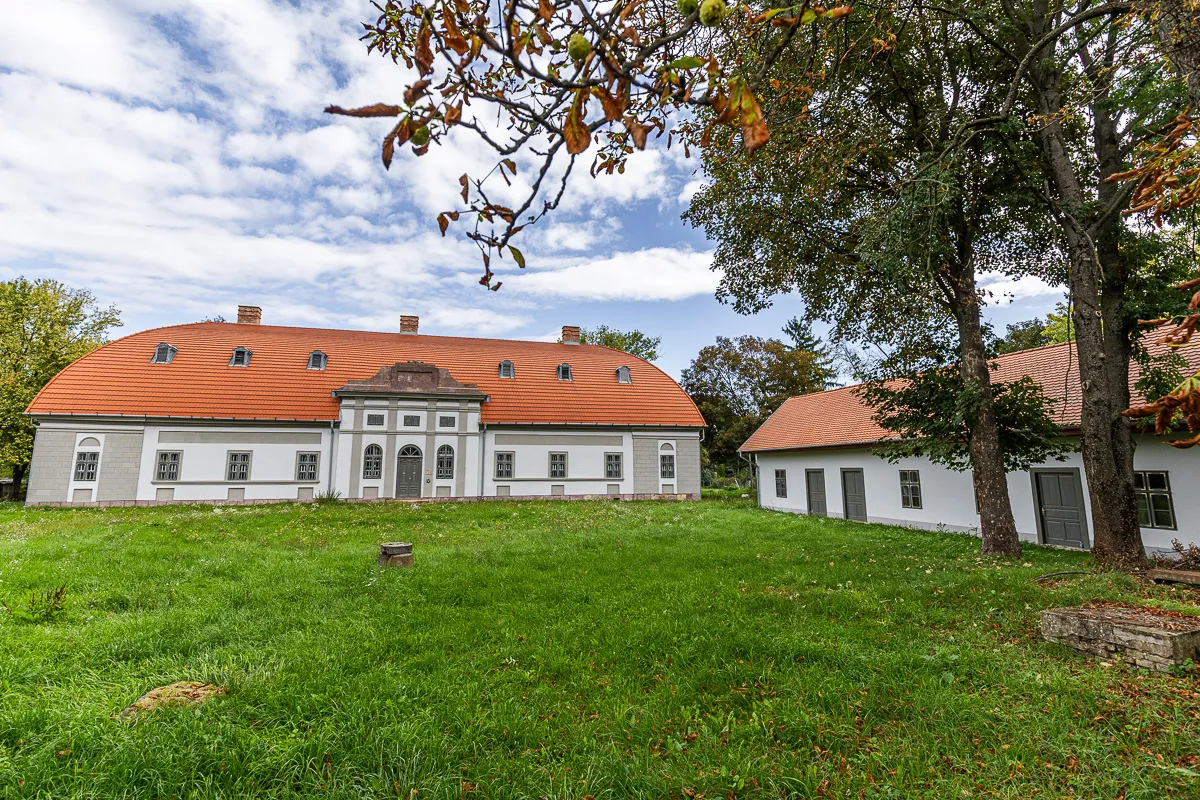
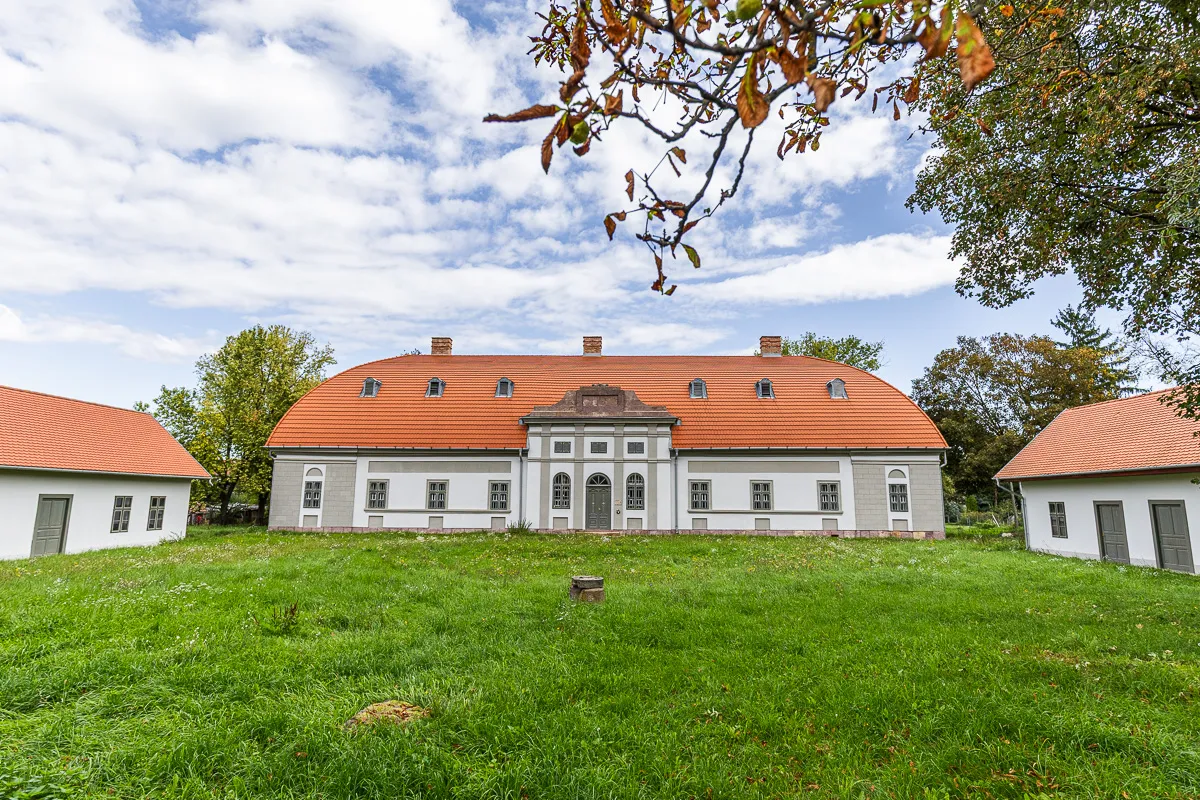
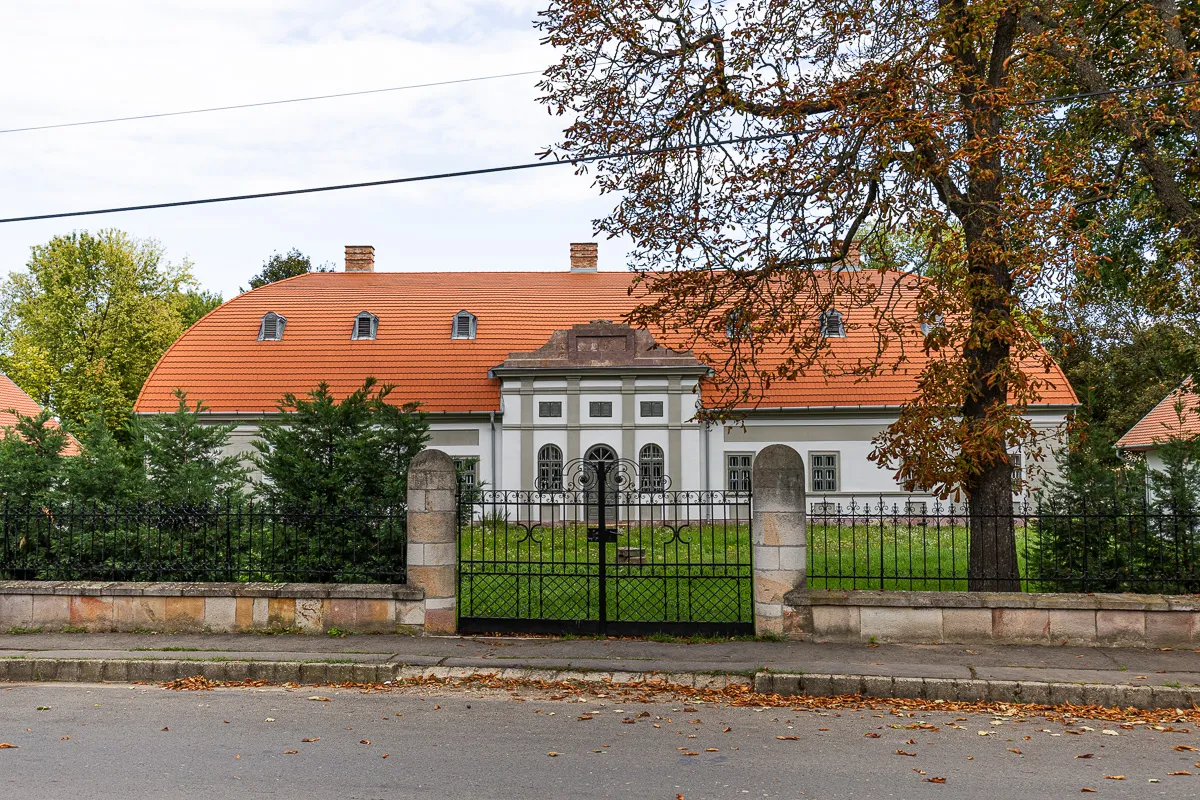
Following the Second World War, the castle's entire interior was destroyed, and the surrounding park also suffered bomb damage. After nationalisation, the building was converted into temporary housing. However, by then the roof had deteriorated so severely that the residents could not remain there for long. The castle was subsequently used as a warehouse, and from 1963 it functioned as a secondary school. Thanks to municipal and state funding, the roof was repaired and four classrooms were created.
Yet, due to the low number of students, the school closed in the spring of 19697. A turning point came in 1970, when a factory manufacturing and assembling telecommunications components (Factory of Telecommunications Materials) was established within the castle. Initially employing only a few dozen people, the workforce grew to nearly 2008 within just one or two years, creating valuable employment opportunities, particularly for women. The company pledged not to carry out major structural alterations, allowing the castle to retain its historic character. Another milestone in the castle's modern history came in 2012, when it received a completely new roof structure. As the roof is exceptionally steep, both the roofing and tiling required remarkable engineering expertise. The outstanding restoration was recognised with several prestigious awards, including the Roof of the Year Award presented by the Hungarian Association of Roof Insulators, Roofers, Sheet Metal Workers and Carpenters (ÉMSZ), as well as the Golden Axe Travelling Award9. The restoration of the castle's present façade was completed in 2015.
The reconstruction of the Prónay Castle is truly impressive. We sincerely hope that this beautiful historic building will soon be filled with new life and a worthy new purpose.