



- Noémi Vizi
- Photos: Borbély Levente
- Reading time: 3 minutes
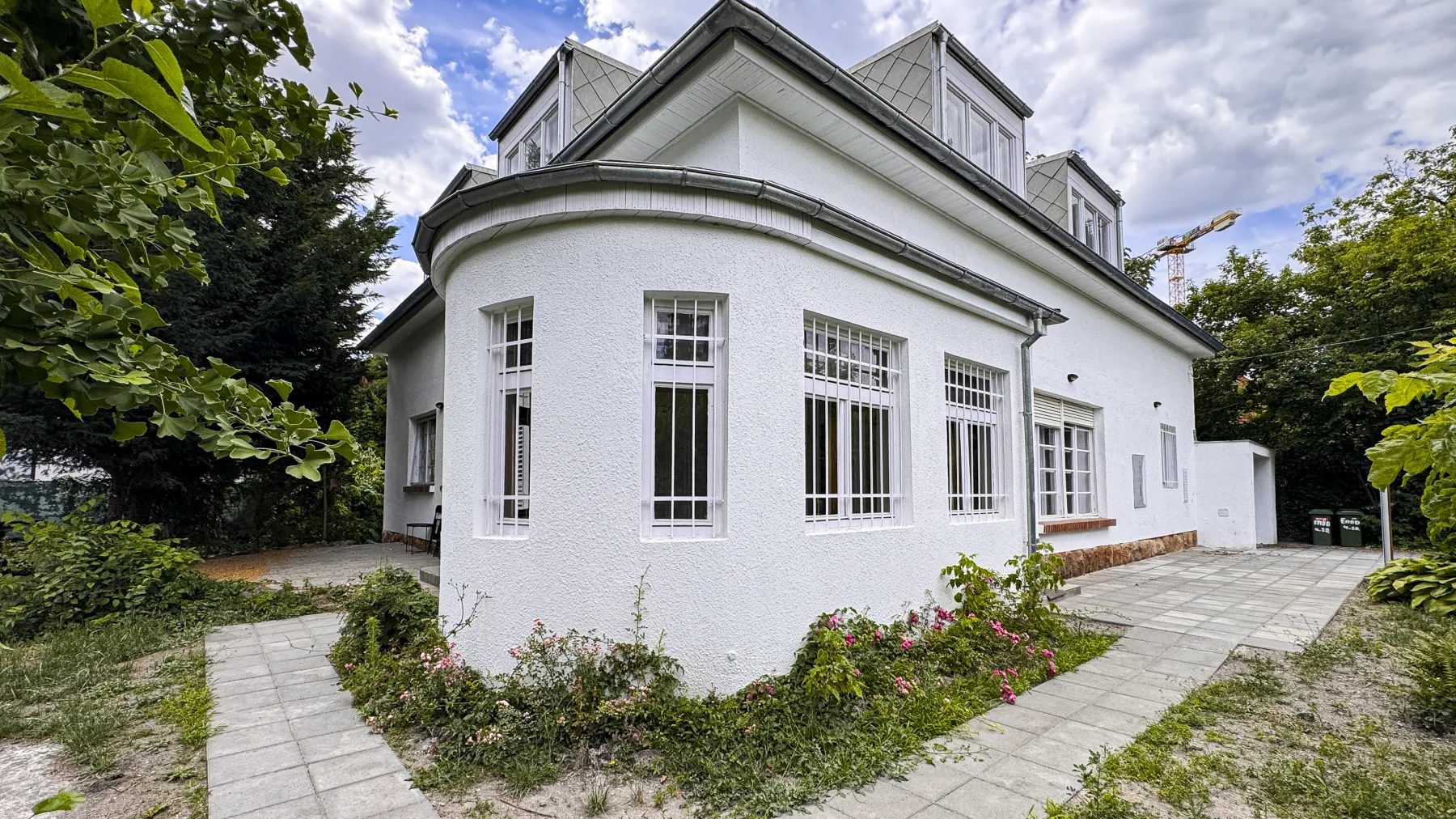
Sauska Castle, Yellow Castle, or also known as the Mattyasovszky Zsolnay Castle
Three names, one and the same Neoclassical castle, which also features elements of the Zopf style. The castle, built in the 19th century, is located in the village of Bár in Baranya County. The first written record dates back to 1296, but the area was already inhabited during the Neolithic period. Archaeological findings have revealed Roman-era wall remains and traces of ancient roads. The settlement lies along an important strategic route; for example, King Louis II’s army passed through here on its way to the Battle of Mohács in 1526, where they fought against Sultan Suleiman I. The lands around the settlement were of excellent quality, which is why the area did not become depopulated even during the Ottoman occupation. The landowners continuously sought to increase the population by settling Hungarian, Slavic and German families in the region1.
During the 15th and 16th centuries, György Báry was the largest landowner in the area, while in the 1730s the Sauska family took over the administration of the estate2. The most famous members of the family were Lajos Sauska (born in 1786, chief magistrate) and Antal Sauska (born in 1780, member of parliament). Their wealth was primarily based on the excellent agricultural land and the grain produced here. Due to the Napoleonic Wars at the beginning of the 19th century, grain trading brought significant economic prosperity to both the Sauska family and the entire region. This made it possible to build the White Castle and the Yellow Castle in Bár, as well as another residential building connected to the family in Somberek. In 1810, Lajos Sauska inherited the properties in Bár, while Antal inherited the estate in Somberek3.


During its golden age, the Yellow Castle must have been a popular social gathering place, reflecting both the lifestyle of the nobility and the architectural trends of the period. Neoclassical architecture dominated from the 1800s until around 1850. Buildings of this style were typically composed of simpler geometric forms, often complemented by a columned portico at the entrance and rows of windows. These characteristics can also be observed here in Bár; however, the simplicity and clean lines also refer to the Zopf style, which was typical of the second half of the 18th century. The castle park once covered an area of up to 5 hectares, featuring a diverse range of plant and tree species, including silver firs, thuja trees, hazel trees, horse chestnuts and maples. Today, only approximately 1.5 hectares remain, which is considered a locally protected natural area4.
In the 20th century, the estate was owned by Mária Sauska and her sister Paula until the Russian occupation in 1944. Their parents were Jenő Mária Pál Sauska and Julianna Papp. Mária’s husband was Zsolt Mattyasovszky Zsolnay, a chemical engineer and former owner of the Zsolnay Porcelain Factory in Pécs. (Miklós Zsolnay had no children of his own, so he adopted the children of his siblings Teréz and Júlia, as well as his wife’s son from her previous marriage in 1910. This is how the surnames Mattyasovszky and Sikorszki were added before the Zsolnay name5.) The First World War caused significant difficulties and damage to the Zsolnay factory. In 1919, Miklós Zsolnay transferred ownership of the factory to his sons Mattyasovszky Zsolnay Zsolt, Tibor, and their cousin Miklós Sikorszki. In 1928, on the occasion of Vilmos Zsolnay’s 100th birthday, the factory museum was opened. In the same year, Zsolt, who worked as a chemical engineer, developed the use of eosin glaze on porcelain products.


Zsolt passed away in 1934, and his wife Mária continued living in the castle with their children László, Ágnes and Klára until the Russian occupation. Afterwards, the castle was nationalised. From 1946, it operated as a poultry breeding model farm, and in the 1950s it became part of the Bóly State Farm. Today it is privately owned; the castle is in good condition and its garden is also beautifully maintained.