



- Noémi Vizi
- Photos: Felszeghy Áron
- Reading time: 2 minutes
The Zichy–Vay Castle (Fortified Manor) of Mohora
Mohora is a village of around 900 inhabitants in Nógrád County, whose history offers a fascinating insight into the past. In this article, we introduce the Zichy–Vay Castle, a building that from the outside resembles a fortress rather than a traditional manor house. Ottoman architectural elements can also be noticed on the building, but whether the onion domes and crescent symbols are truly the result of Turkish influence will be revealed in the article.
While researching the history of Mohora, located only 10 kilometres from Balassagyarmat, it became clear that the settlement has been an exceptionally rich archaeological site. The area was already inhabited in prehistoric times. Numerous pottery fragments, bones, stone tools, and chipped flint blades have been discovered here, many of which are now preserved in the Hungarian National Museum1. A thin bronze needle provides evidence of Bronze Age life, while Celtic urns and Roman coins have also been found. The hills of the Cserhát region, the land of the Palóc people, and the area beside the Fekete-víz stream were once the scene of a vibrant community life.
Two famous Hungarian figures are also connected to Mohora: Kálmán Mikszáth and Klári Tolnay. Mikszáth’s wife – whom he married twice, the second time in the village church – was Ilona Mauks, daughter of Mátyás Farkasfalvi Mauks, the local district magistrate2. In the centre of the village stands a large chestnut tree named after Mikszáth, as he loved spending time beneath it. The tree can be found in the Mikszáth–Mauks Memorial Park, directly opposite the church where their wedding took place. Klári Tolnay was born here and spent her childhood in Mohora. In a house only a few steps away from her childhood home, an exhibition has been created displaying her personal belongings, costumes, and clothing, commemorating one of the greatest stars of Hungarian theatre.
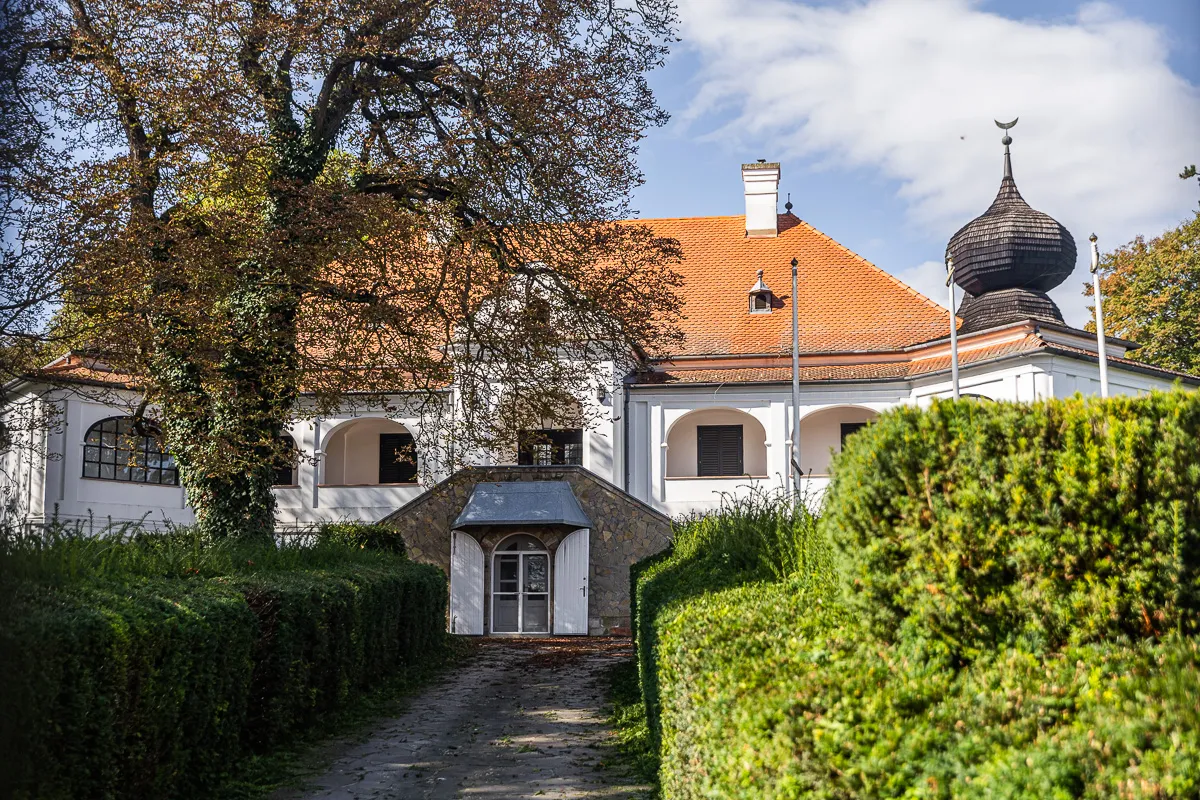
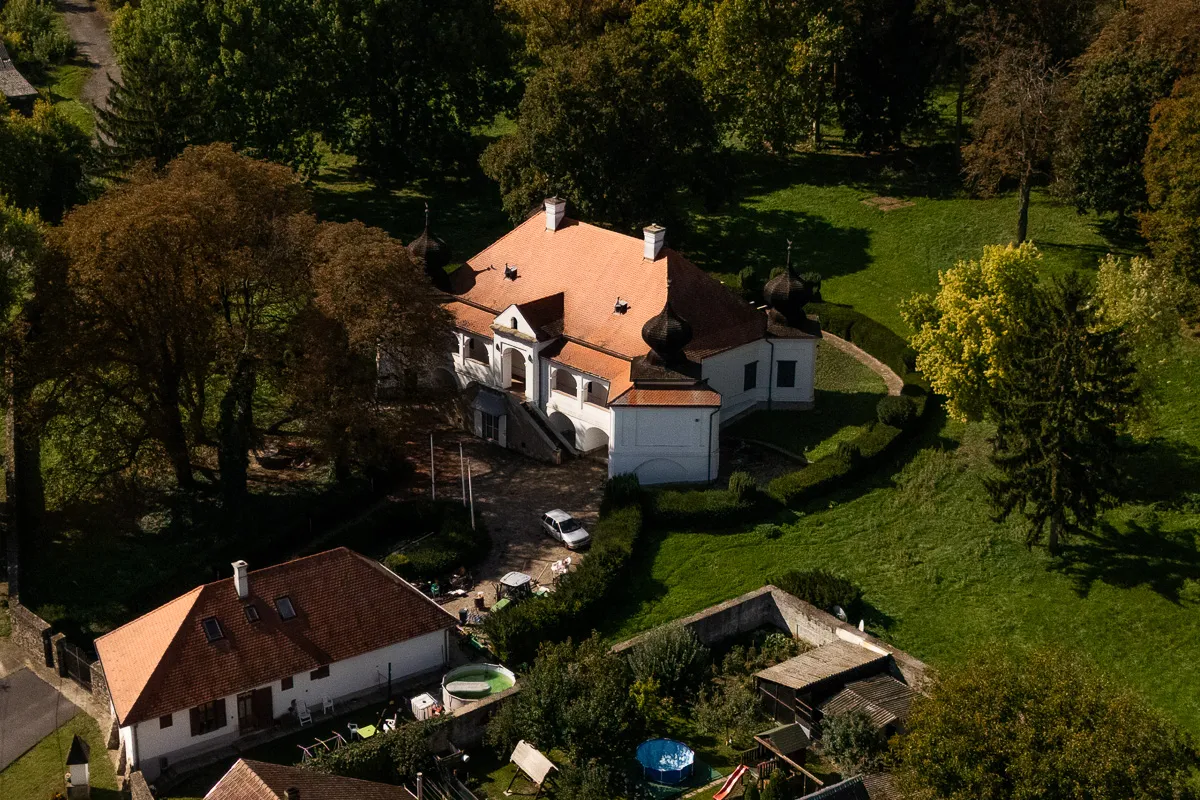
A few minutes’ walk from the memorial site, the Zichy–Vay Castle comes into view. The building was once surrounded by a much larger park and was constructed at the beginning of the 18th century. Since neither the exact date of construction nor the name of the builder has been recorded, researchers can only rely on estimates. Some believe that a building already stood here during the Ottoman occupation and that it may have been built3 by the Turks, possibly belonging to a local bey4. This theory is supported by the four square-based towers at the corners of the castle5, covered with wooden shingles and topped with onion-shaped domes, which from a distance resemble turbans. Beneath two of the corner towers, rooms contain built-in stone bathing pools6. According to local legends, the Ottoman nobleman built the residence for himself and his harem7. However, it is much more likely that these features are simply characteristic elements of the Baroque style, such as the onion domes that were fashionable during the period.
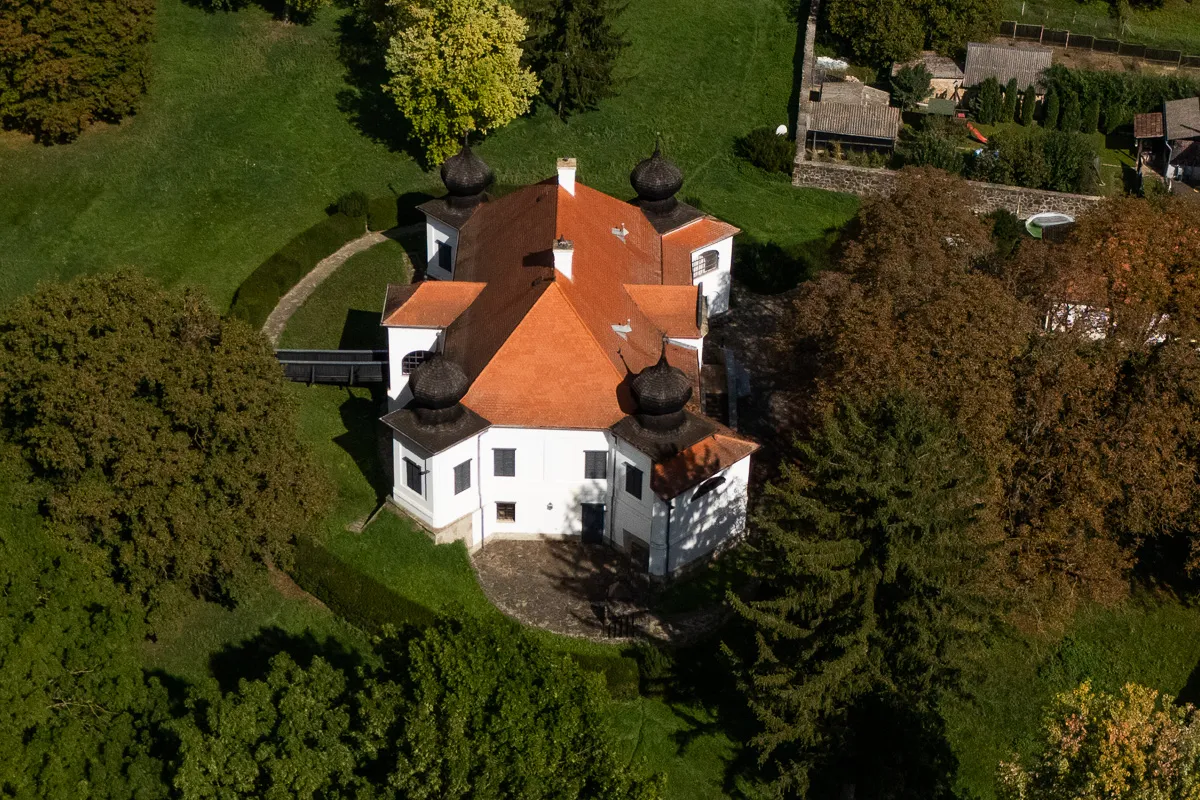
The building is a fortified manor house, representing a transition between medieval castles and later aristocratic residences. Such structures were especially common in former Ottoman-occupied territories after the end of Turkish rule8. The Mohora fortified manor is surrounded on its eastern side by sloping terrain, where a defensive moat may once have existed. The compact rectangular building has corner towers reminiscent of fortress architecture, with onion domes topped by crescent symbols. The single-storey building has a basement beneath it; when viewed from the west it appears single-storey, while from the east it seems to have two levels. The interiors are vaulted, and according to earlier studies, one room contained a moon-shaped symbol while another displayed a sun-shaped motif. Later research disproved the assumption that the castle had ever been under Ottoman ownership.
Little is known about its early owners. From 1740, it belonged to the Sréter family, who probably expanded the building. Later it came into the possession of the Zichy family, and eventually the Vay family owned it9. The Vays likely acquired it at the beginning of the 20th century, while the Zichys had owned it approximately 50 years earlier. When the property became ownerless and its condition began to deteriorate, it was transferred to the municipality. In 1991, the Foreign Trade Bank purchased it for 12.5 million forints, a sum that helped finance the construction of a sports hall in Mohora10. The bank did not retain ownership for long; the castle was sold again and eventually came into Belgian ownership. According to a contemporary newspaper article from 1996, the Belgian owners restored the building and used it privately11. Today, the castle cannot be visited, as it remains privately owned and can only be viewed from the outside.
However, if you are visiting the area, one attraction that should not be missed is the Dolinka wine cellar row, where you can also taste local wines from the Palóc region.