




- Noémi Vizi
- Photos: Felszeghy Áron
- Reading time: 2 minutes
Kubinyi–Prónay Castle – One of Karancsság’s Iconic Buildings
Karancsság is located northwest of Salgótarján, bordered by the Karancs Mountains to the northeast and the Cserhát Hills to the south. The area was already inhabited before the Hungarian Conquest, as archaeological finds include everyday objects, clothing ornaments, and artifacts related to horse breeding1. The first written mention of the settlement dates from between 1201 and 1235, when the villages of (Karancs)Ság and Halászi, in Nógrád Province, were involved in a legal dispute with castle warriors who had caused significant damage to the local inhabitants. The area was an ancestral estate of the Zách family, whose most famous member was Felicián Zách, known for his attempted assassination of King Charles I (Charles Robert) and his family. Following the failed attack in 1330, he was executed, his estates were confiscated, and they became property of the Crown. King Charles I later granted the lands to the Méhi family. During this period, the inhabitants cultivated vineyards and traded wine, which became a highly profitable activity. Over the centuries, several noble families owned the region, including László Sághy from 1471, Zsigmond Balassa in 1548, and István Zichy in 1686. During the Ottoman occupation, the settlement belonged to the Sanjak of Szécsény. From 1770 onward, it became the property of Gáspár Kubinyi.


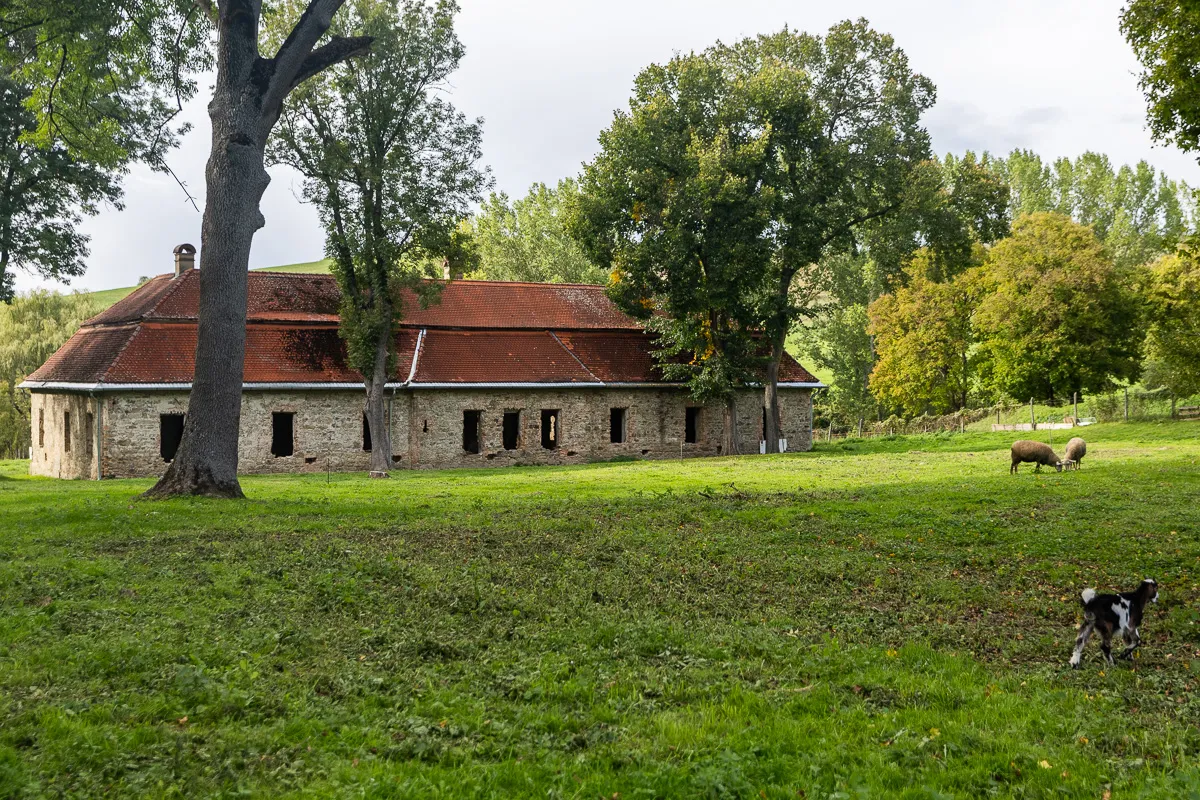
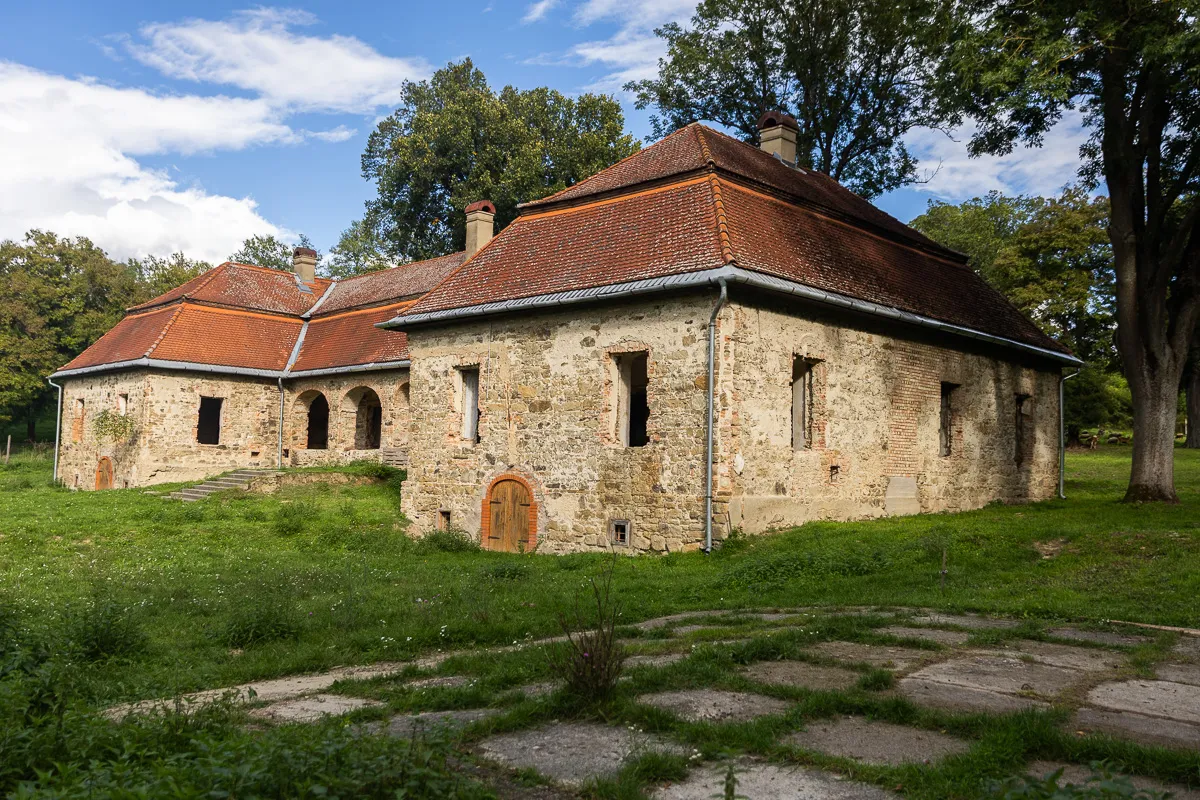
Gáspár Kubinyi was born in 1778 in Felsőkubin, the son of József Kubinyi and Amália Eötvös. His wife was Anna Tornyos. According to historical sources, their children were Zsigmond, Vendel, Vilma, Lilla Erzsébet, Jozefa, István, Tivadar, Konstancia, Lujza, and Adél. For this large family, he built the Baroque-style mansion in 1794. The U-shaped building with its mansard roof stands on a spacious estate2. Although it is officially a single-storey building, the barrel-vaulted cellar is visible from the outside, giving the impression that it has two levels.
After the Kubinyi family, Karancsság and its surrounding estates came under the ownership of Margit Lónyay, Baron Gábor Szilveszter Prónay, and later Baronesses Róza and Irma Prónay3. The latter acquired the former Kubinyi Mansion, which is why it became known as the Kubinyi–Prónay Castle. Unfortunately, little is known about its later history. It has remained in a similar condition for decades, with no substantial progress made toward its restoration. The walls have never been replastered, leaving the mixed masonry and the building's entire structural system exposed. Although renovation works have reportedly begun on several occasions, the building has never become habitable nor found a new institutional function. We sincerely hope this remarkable building will soon experience a revival, and that we will be able to report on its restoration.
If you are considering purchasing property in the area, a 9-hectare estate has been subdivided from the former grounds of the Kubinyi–Prónay Castle. It features a family home with stunning panoramic views. Further information is available at the following link:
https://dandan.hu/lakoingatlan/premium-csaladi-haz-karancssag/