


-
 Written by:
Noémi Vizi
Written by:
Noémi Vizi
- Photos: Fortepan
- Reading time: 2 minutes

The Rise of the Esterházy Family and Their Architectural Heritage from the 16th Century to the Present Day
Did you know that a significant part of the Esterházy family’s wealth has remained intact even today? This was made possible by the institution of the family trust (fideicommissum), which was incorporated into law in 1687 through the efforts of Pál Esterházy. Members of the family commissioned the construction of countless castles and manor houses, and among them were county lords, royal councillors, and members of parliament. One of them even served as Prime Minister of Hungary. In this article, we explore the history of the Esterházy family.
The history of the Esterházy family can be traced back to Mogud, a member of the Salamon kindred, who served as a royal court official under King Béla III (1148–1196)1. According to a document from 1238, the two sons of Salamon, Péter and Illés, divided their father’s estates between them2. Péter became the founder of the Esterházy family, while Illés founded the Illésházy family. The surname Esterházy was first adopted by Benedek in 1553, followed by his son Ferenc and his grandson Miklós I. He played a crucial role in acquiring the family’s wealth. In fact, within only two generations, they rose from the ranks of the lesser nobility to become the wealthiest aristocratic family in Hungary. The key to their advancement was marriage3. Miklós I Esterházy (1583–1645) held the office of Palatine of Hungary. His first marriage was to Orsolya Dersffy, on 22 November 1612. According to historical sources, the widow – considerably older than Miklós, whose former husband had been Ferenc Magóchy, Captain-General of Kassa (Košice) – had already welcomed his attention while her husband was still alive4. They married the day after the mourning period ended. Miklós also demonstrated his love and commitment by converting to Catholicism, despite having previously been Protestant. Their marriage caused a great scandal in the 17th century, but their love overcame all obstacles. Unfortunately, because Orsolya was unable to have children, she could not provide Miklós with an heir. However, she allowed him to have a child with another woman, which resulted in the birth of István. Orsolya died in 1619, a loss that Miklós struggled to overcome. Five years later, in 1624, he married Krisztina Nyáry, with whom he lived happily until the end of his life.
This marriage produced eight children. Among them, Pál Esterházy (1635–1713) was the most significant figure regarding the growth of the family’s wealth. His sister, Júlia Anna, was married to Ferenc Nádasdy, who was executed by beheading. As a consequence of this tragedy, Pál was able to acquire numerous estates, including those of Léka, Steinberg, Teucht, Felső- and Alsószénégető, Hámor, Németgyirót, Felsőpulya, Ómód, Horvátzsidány, and Peresznyesup5. His first wife was Orsolya6 Esterházy. After her death, he married Éva Thököly, with whom he had seven children. Thanks to his significant military successes, further opportunities for increasing his wealth opened up before him. Among other privileges, he received a lease for the salt trade monopoly, held the position of county lord, and was granted the title of prince. However, his most forward-looking achievement in preserving the family’s wealth was that in 1695 he became one of the first members of the Hungarian nobility to transform his estates into a fideicommissum7. This legal institution made it possible for estates to be inherited as a single, indivisible unit. The Habsburg rulers considered this necessary in order to preserve the influence and power of important noble families for future generations. At that time, approximately 10–12 aristocratic families possessed such fideicommissum estates8.
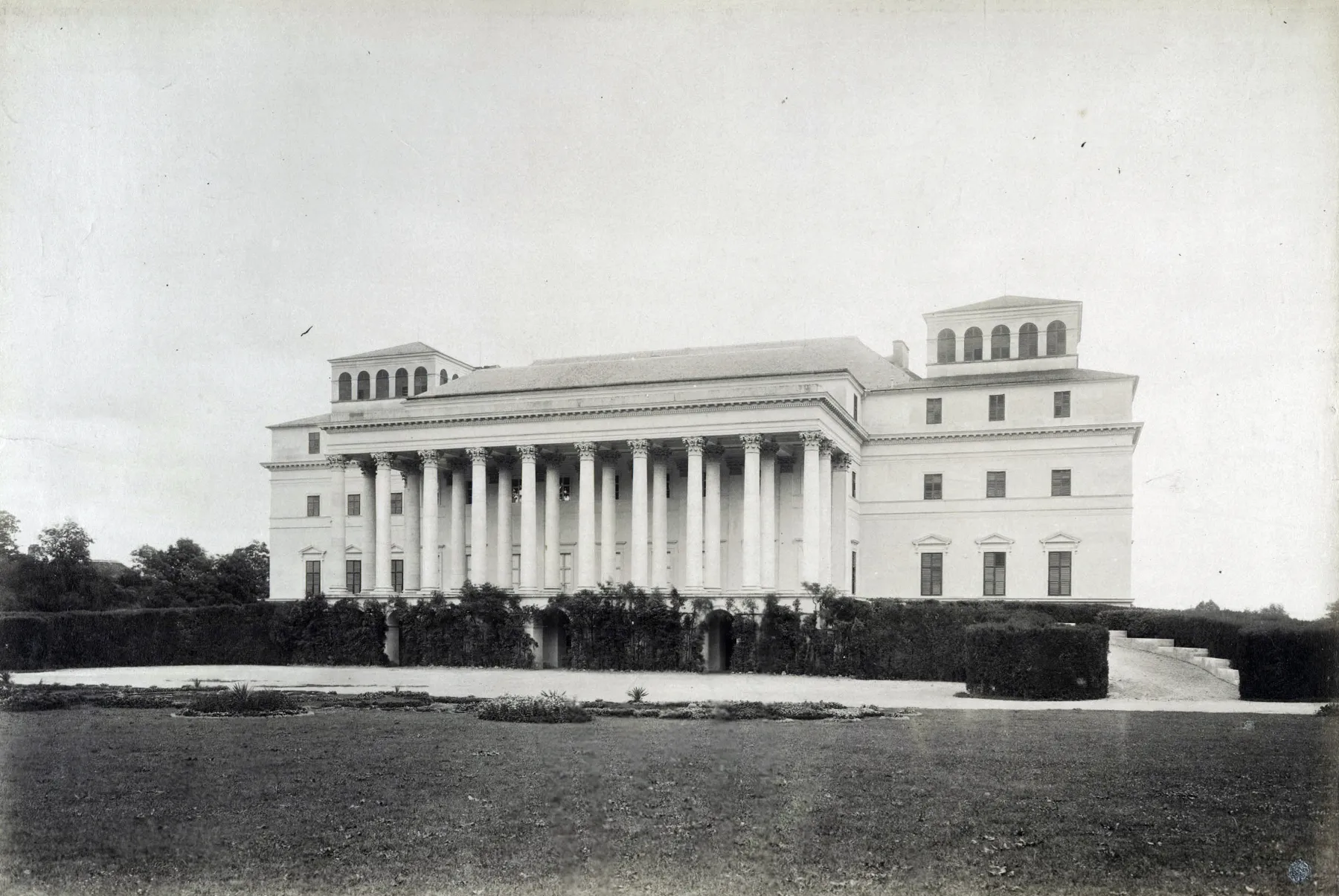
The Esterházy family commissioned the construction of numerous castles over the centuries. One of the most unique Hungarian castles that can still be visited today is the Esterházy Palace in Fertőd–Eszterháza, which was envisioned and brought to life by Nikolaus II Esterházy “the Magnificent” in 1762. Even Empress Maria Theresa was a guest here. It is important to add, however, that this ambitious project left the family heavily indebted for generations. Nevertheless, the results of this grand undertaking can still be admired today. Further Esterházy castles can be found in the following settlements: Pápa, Bakonyoszlop, Devecser, Szigliget, Szentlőrinc, Csákvár, Sárosd, Kapuvár, Gyömöre, Tata, Majk, Réde, Bakonyszombathely, Tamási, Salzburg, Galanta, Eisenstadt (Kismarton), Lockenhaus (Léka), Forchtenstein (Fraknó).
An interesting fact is that in Burgenland, Eastern Austria, the Esterhazy Betriebe AG operates as an asset management organisation established in a foundation-like structure for managing the Esterházy heritage. Their goal is to preserve the remaining family assets as a whole while continuing to develop and expand them. The organisation manages private forestry enterprises, organic farming, internationally unique collections, events, festivals, wineries, and hotels9. It is truly inspiring to see that the architectural heritage of a noble family which played such a significant role in Hungarian history is still carefully preserved today, and that many of these historic sites are open to visitors. If you have the opportunity, we encourage you to visit some of the Esterházy castles.
Image: Sárosd
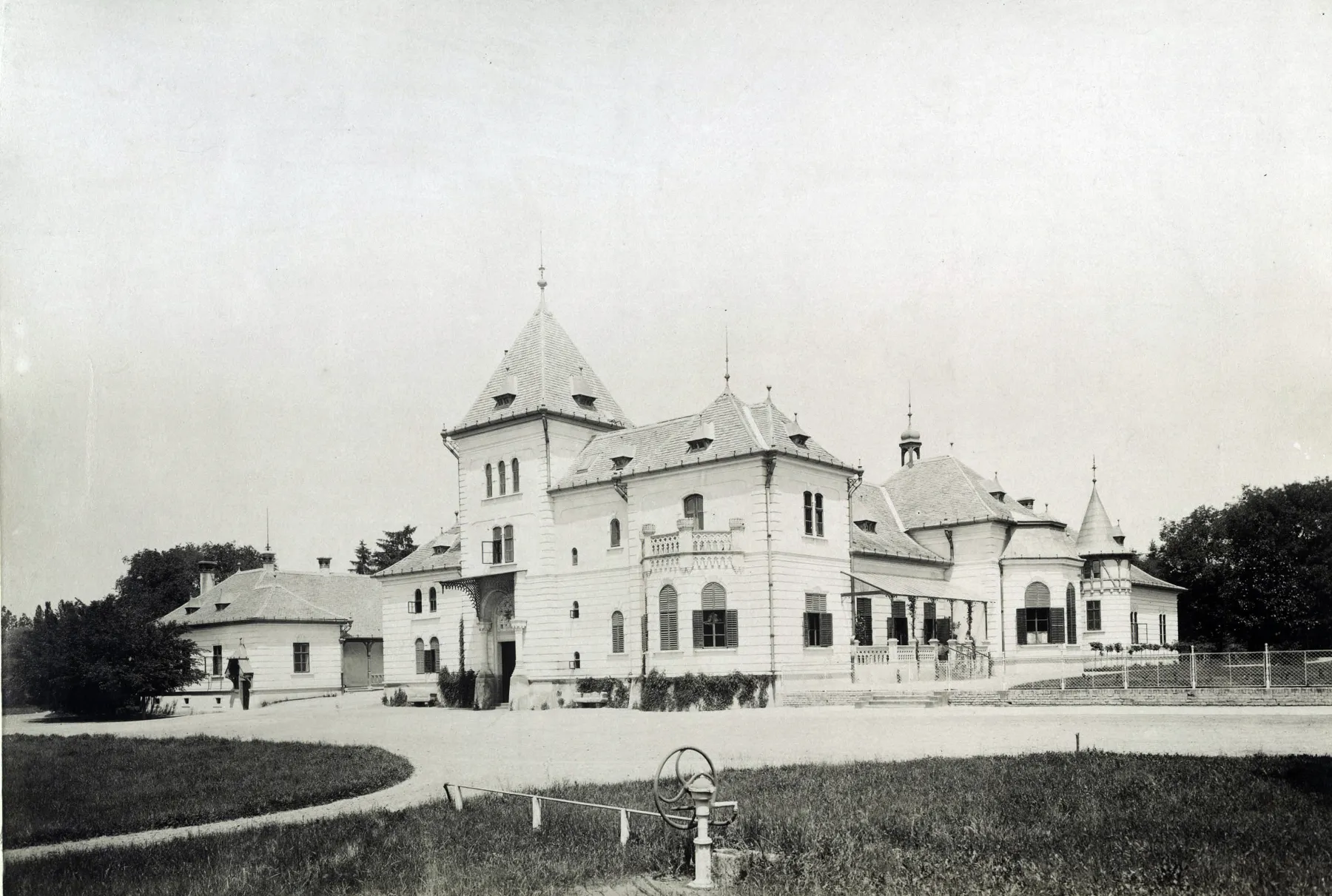
Image: Eisenstadt (Kismarton)
1https://muzeumcafe.hu/hu/az-esterhazy-csalad-megujulo-kastelyai/
2https://amultemlekei.hu/esterhazy-csalad-tortenete-kastelyok/
3https://telex.hu/gazdasag/2025/01/05/esterhazy-vagyon-csalad-fonemes-grof-herceg-erdeszet-ausztria
4https://ng.24.hu/kultura/2007/11/22/a_kulonos_hazassag/
5https://hu.wikipedia.org/wiki/Esterh%C3%A1zy_P%C3%A1l_(n%C3%A1dor)
6https://real-eod.mtak.hu/6179/7/MagyTortEletrajzok_40_ESTERHAZY_PAL.pdf
7https://hu.wikipedia.org/wiki/Esterh%C3%A1zy_P%C3%A1l_(n%C3%A1dor)
8https://telex.hu/gazdasag/2025/01/05/esterhazy-vagyon-csalad-fonemes-grof-herceg-erdeszet-ausztria
9https://telex.hu/gazdasag/2025/01/05/esterhazy-vagyon-csalad-fonemes-grof-herceg-erdeszet-ausztria